AZS refractory materials (Al₂O₃–ZrO₂–SiO₂) are core lining materials for glass furnaces. Different AZS brick grades show significant performance differences in corrosion resistance, glass contamination control, and service life. Correct selection of AZS 33, AZS 36, and AZS 41 for specific furnace zones directly affects furnace campaign life and glass quality.
This article provides a technical analysis of how different AZS refractory grades are applied in various glass furnace lining areas, based on industry standards and practical furnace experience.
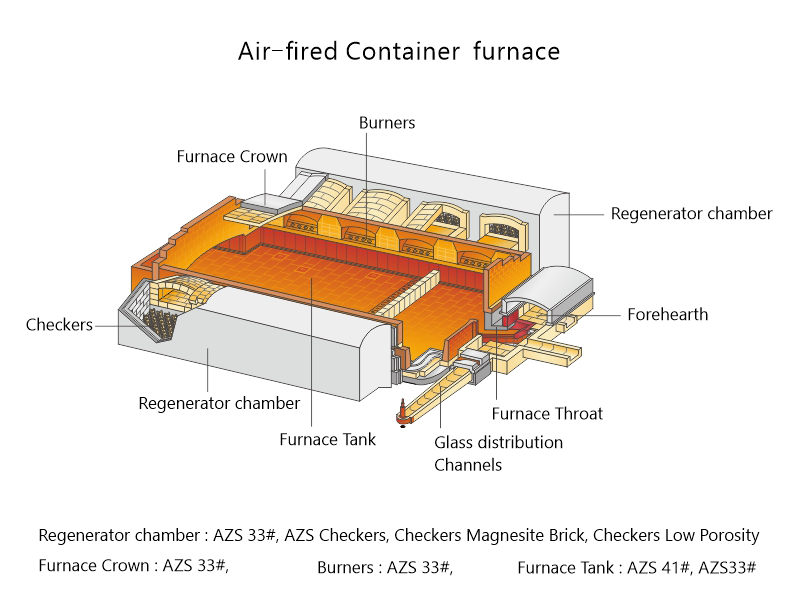
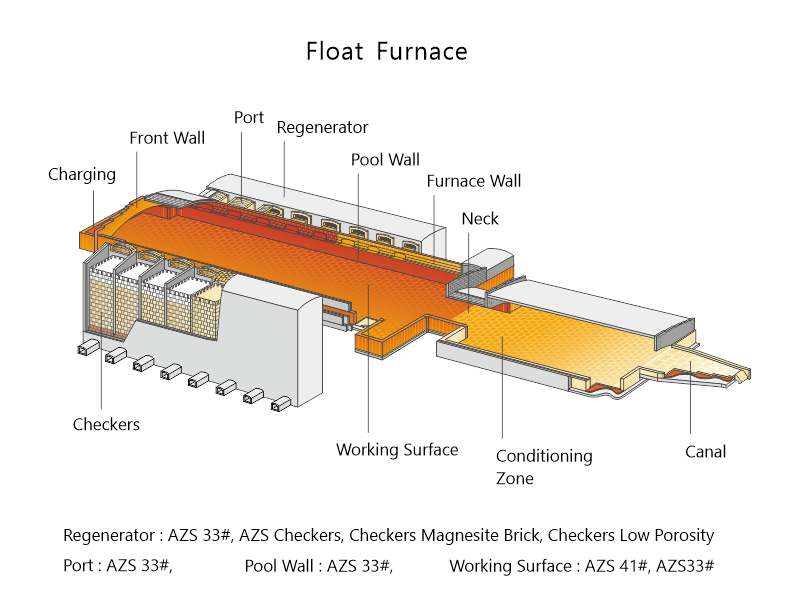
1. Basic Properties of AZS Refractory Materials
AZS refractory bricks are produced by fused cast technology, ensuring high density and uniform microstructure. Their main technical advantages include:
- Excellent resistance to molten glass corrosion, especially due to ZrO₂ content
- High mechanical strength under long-term thermal and mechanical stress
- Good thermal shock resistance, suitable for temperature fluctuations
- Low glass contamination, reducing stones, cords, and bubbles
Because of these characteristics, fused cast AZS refractory bricks are widely used in float glass, container glass, and special glass furnaces.
2. Chemical Composition and Performance Comparison of AZS Grades
| Grade | Al₂O₃ (%) | ZrO₂ (%) | SiO₂ (%) | Glass Phase (%) | Max Service Temp |
|---|---|---|---|---|---|
| AZS 33 | 32–35 | 32–35 | 14–17 | 18–22 | 1700–1750°C |
| AZS 36 | 47–50 | 32–35 | 13–15 | 15–18 | 1750–1780°C |
| AZS 41 | 45–48 | 40–42 | 11–13 | 10–13 | 1780–1850°C |
Reference: YB/T 4579-2016, Fused Cast Refractories Industry Standard
As ZrO₂ content increases, glass phase content decreases, resulting in stronger corrosion resistance and lower glass contamination risk.
3. Practical Application of AZS Grades in Glass Furnaces
3.1 Application of AZS 33 Refractory Bricks
AZS 33 is the most economical and widely used grade. Typical applications include:
- Superstructure: breast walls, charging zone sidewalls
- Working end sidewalls and roof areas
- Regenerator upper checkerwork
- High-temperature flue sections
Technical rationale:
AZS 33 provides balanced corrosion resistance and cost efficiency. For areas not in direct contact with molten glass, it delivers stable performance and reliable service life.
3.2 Application of AZS 36 Refractory Bricks
AZS 36 is a key lining material for critical furnace zones, including:
- Melting tank sidewalls in direct contact with glass
- Throat and channel areas
- Doghouse and breast wall zones near flame impact
Technical rationale:
With higher Al₂O₃ content and lower glass phase, AZS 36 offers significantly improved corrosion resistance. In float glass furnaces, it is commonly used in hot spots to achieve long campaign life.
3.3 Application of AZS 41 Refractory Bricks
AZS 41 represents the highest performance level in the AZS series. It is mainly used in:
- High-corrosion hot spots of melting tanks
- Electrode blocks and bubbling zones
- Doghouse corners exposed to mechanical and chemical attack
- High-quality glass furnaces (solar glass, borosilicate glass)
Technical rationale:
With ZrO₂ content ≥40%, AZS 41 provides maximum resistance to glass corrosion and the lowest risk of glass defects, making it essential for premium glass production.
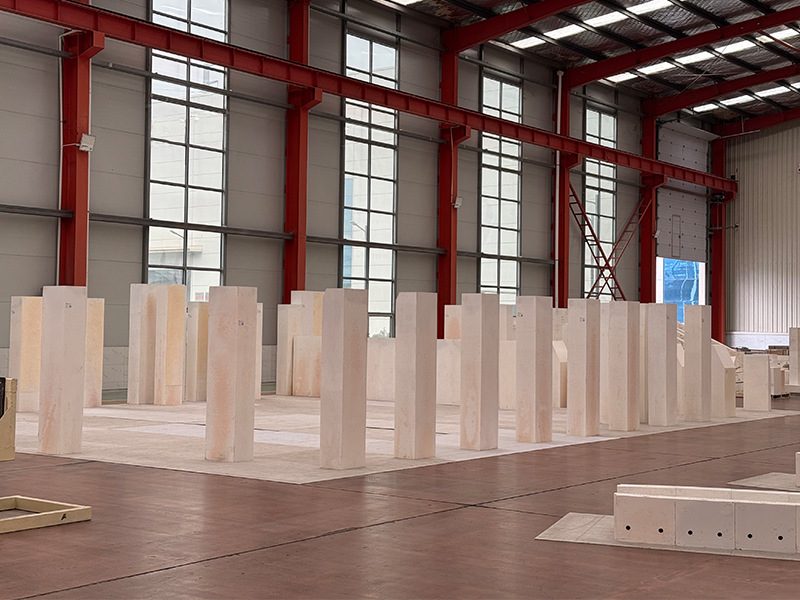
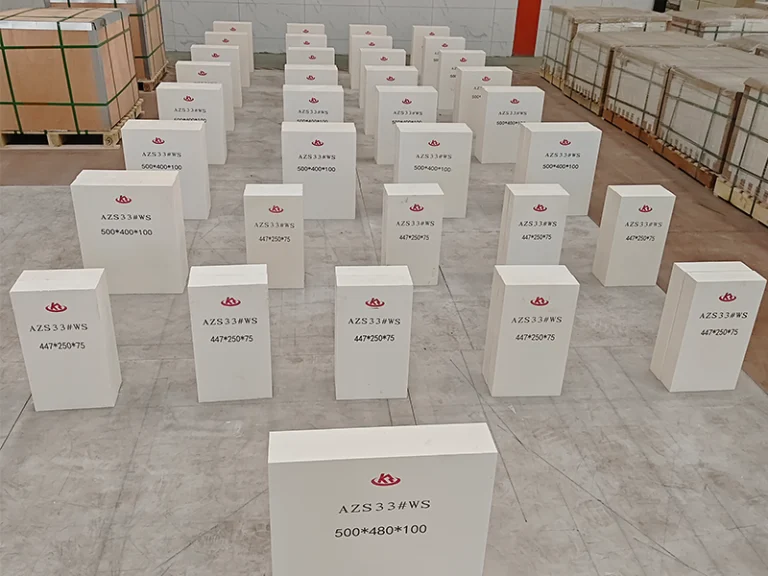

4. Key Factors Influencing AZS Grade Selection
Glass Type
- Soda-lime glass: AZS 33 & AZS 36
- Borosilicate glass: AZS 41 recommended
- Aluminosilicate glass: high-zircon AZS required
Furnace Zone Conditions
- Glass line area: inclined or dense cast AZS bricks
- Electrode openings: defect-free AZS 41
- Roof and crown zones: focus on thermal shock resistance
Cost–Performance Balance
- High corrosion zones: AZS 41
- Medium corrosion zones: AZS 36
- Non-contact zones: AZS 33
AZS Lining Design Based on Actual Furnace Service Conditions
The successful application of AZS refractory lining is not based on material grade alone, but on precise matching between furnace design, operating conditions, and glass type. Rational configuration of AZS 33, AZS 36, and AZS 41 allows glass manufacturers to optimize furnace life, control production costs, and maintain stable glass quality.
As an experienced AZS refractory supplier, Kerui Refractory provides technical support based on material testing, furnace condition analysis, and long-term application data, helping customers achieve reliable and verified glass furnace lining solutions.


