Discover The Latest Trends and News
About Refractory Industry Here!
Fiberglass Furnace Refractory Materials By Component

Fiberglass Furnace Lining Selection Guide

Fiberglass furnaces are designed for continuous glass melting and fiber drawing operations. Compared with rock wool and basalt melting furnaces, fiberglass furnaces require cleaner melting environments, more stable temperatures, and higher resistance to glass liquid contamination. Because furnace stability directly affects fiber quality and production … Read More

Basalt Furnace Refractory Materials By Component

Basalt Fiber Furnace Lining Selection Guide

Basalt fiber furnaces operate under high-temperature melting conditions and are continuously exposed to molten basalt erosion, iron-rich slag attack, thermal shock, and chemical penetration. Compared with conventional glass furnaces, basalt melting furnaces usually face more aggressive corrosion conditions because basalt raw materials contain higher FeO, … Read More

Refractory materials for various parts of rock wool furnace

Rock Wool Furnace Lining Selection Guide

Rock wool furnaces operate under continuous high-temperature conditions and are exposed to severe slag corrosion, thermal shock, molten material erosion, and mechanical wear. Because raw materials such as basalt, dolomite, and industrial slag often have unstable chemical compositions, the furnace lining is under constantly changing … Read More

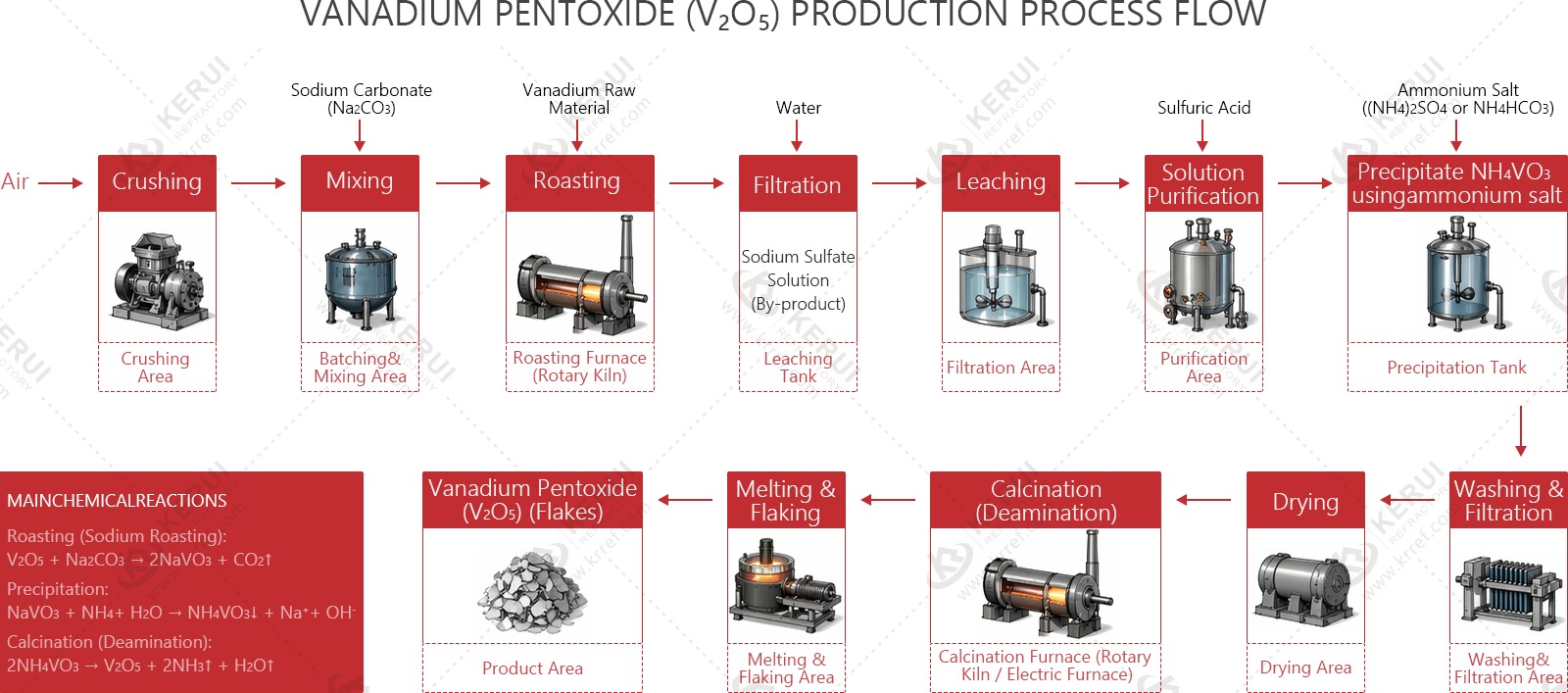
Refractory Materials for Each Zone in V₂O₅ Furnaces: A Complete Guide

Vanadium pentoxide (V₂O₅) furnaces operate under highly aggressive conditions, including strong oxidation, chemical corrosion, and high temperatures. As a result, selecting the right refractory materials for each furnace zone is essential to ensure stable operation, longer service life, and lower maintenance costs. Unlike general industrial … Read More

acidic refractory bricks

Acid Resistant Brick vs Acid Resistant Refractory Brick

In industrial projects involving corrosion and high temperatures, two materials are often confused: acid resistant bricks (acid proof bricks) and acid refractory bricks used in acidic environments. Although they may seem similar, these two products are designed for completely different working conditions and are not … Read More

basic refractory materials

Basic Refractory Materials: Types, Properties and Industrial Applications

Basic refractory materials play an essential role in high-temperature industrial processes, particularly in environments containing alkaline slags and aggressive chemical reactions. These materials offer excellent resistance to basic slags and maintain stability at extreme temperatures, making them widely used in industries such as steelmaking, non-ferrous … Read More

Kerui High Alumina Brick

The Real Difference Between 55%, 65%, and 75% High Alumina Bricks

In the refractory industry, manufacturers usually classify high alumina bricks by their Al₂O₃ content, with common grades including 55%, 65%, and 75%. Many buyers assume that a higher alumina percentage automatically means better performance. In reality, experienced furnace engineers evaluate much more than numbers. The … Read More