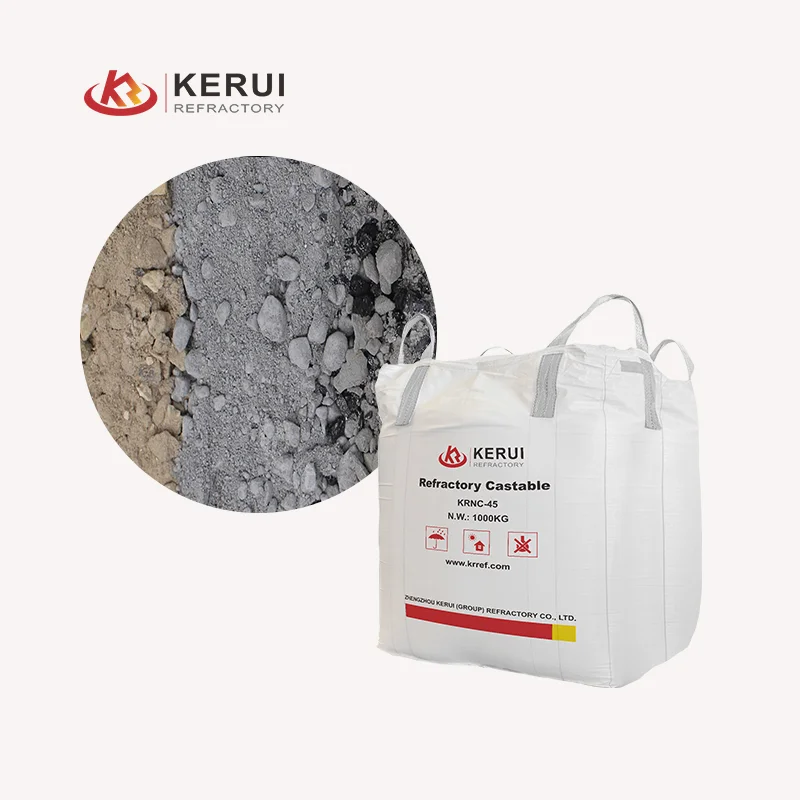
Selecting the correct refractory material is one of the most important decisions in furnace construction and maintenance. Two of the most commonly used materials—insulating castable and dense castable—serve very different roles. Choosing the wrong one can result in heat loss, higher fuel consumption, premature lining failure, or unnecessary costs.
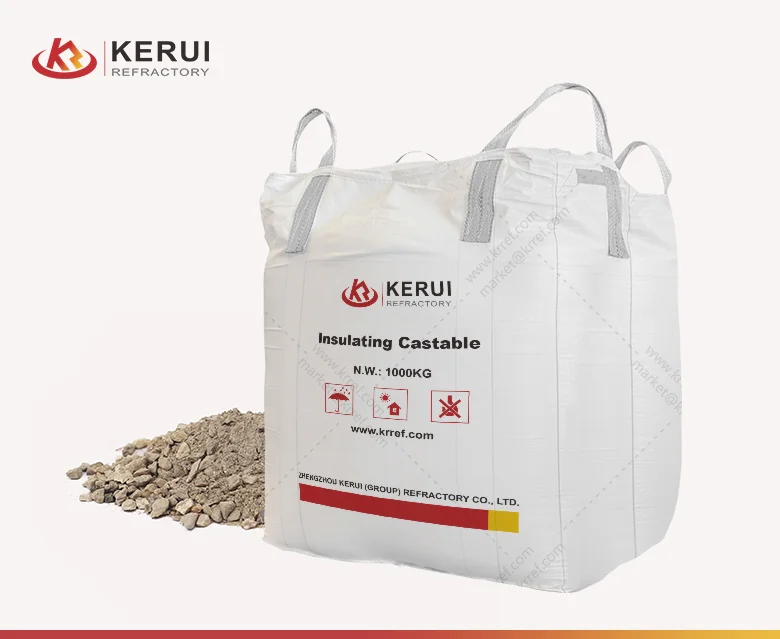
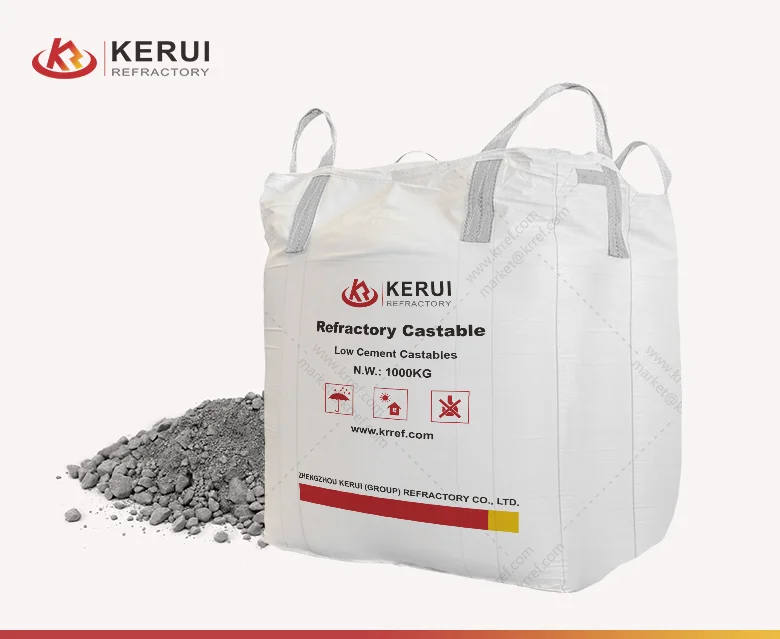
As a leading manufacturer of refractory materials, Kerui Refractory provides both insulating castables and dense castables for various industrial furnaces.
1. Understanding the Core Difference Between Insulating and Dense Castable
Insulating Castable
A lightweight material designed primarily for thermal insulation.
Features include:
- Low bulk density
- Low thermal conductivity
- High porosity
- Suitable for non-contact, low-load areas
- Excellent for energy-saving furnace designs
Typical aggregates:
Kerui Refractory offers multiple grades of insulating castables designed for energy-saving furnace structures.
Dense Castable
A heavy, high-strength refractory material designed for working face applications.
Features include:
- High density
- High mechanical strength
- Better wear and impact resistance
- Suitable for areas exposed to flame, abrasion, or molten material
Typical aggregates:
Bauxite, mullite, andalusite, fused alumina.
2. Selecting Based on Temperature Requirements
Temperature is one of the first criteria when deciding between insulating and dense castable.
When to choose Insulating Castable (900°C–1500°C):
- Backing linings
- Non-working zones
- Shell-temperature control
- Chimneys, flues, heat-treatment furnaces
Because its porosity is high, insulating castable cannot handle extreme mechanical stress or chemical attack but performs exceptionally well in reducing heat loss.
When to choose Dense Castable (1300°C–1800°C):
- Burner zone
- Rotary kiln front-end
- Steel ladle or tundish impact areas
- Furnace bottom and slag contact zones
- Any area that needs structural strength
Kerui Refractory dense castables are widely used in steel plants, cement kilns, nonferrous metal furnaces, and high-impact zones.
3. Thermal Design: Insulation vs Strength Requirements
Insulation and strength rarely exist in the same material, so the choice depends on your furnace’s engineering design:
Choose Insulating Castable When:
- You need better heat retention
- You want to decrease fuel consumption
- Furnace shell temperature is too high
- You aim to improve furnace energy efficiency
Insulating castable helps reduce 15–30% heat loss in many industrial kilns.
Choose Dense Castable When:
- Mechanical load is high
- Materials, slag, or gas directly attack the lining
- You need a long-lasting hot-face protection layer
Dense castable creates a strong structural barrier, while insulating castable provides comfort for the whole furnace system.
4. Load-Bearing vs Non-Load-Bearing Zones
Another key distinction is structural support:
Insulating Castable = Non-load-bearing
Suitable for:
- Furnace roof insulation
- Kiln walls (backup layer)
- Heat-treatment chambers
- Secondary linings
It reduces heat transfer but cannot support weight.
Dense Castable = Load-bearing
Suitable for:
- Working hot face
- High-pressure zones
- Areas requiring impact resistance
Kerui Refractory engineers often recommend combining insulating and dense castables to achieve the required strength and insulation performance.
5. Balancing Service Life and Energy Efficiency: Dual-Layer Design
Many modern industrial furnaces use a double-layer structure because neither type alone can meet all operating requirements.
Recommended Structure:
Hot Face (Inside): Dense Castable
- Resists flame, abrasion, corrosion
- Provides mechanical strength
- Withstands molten metal and slag
Backup Layer (Outside): Insulating Castable
- Reduces heat loss
- Lowers energy consumption
- Keeps steel shell temperature safe
This design offers:
- Longer overall lining life
- Lower operating cost
- Better fuel efficiency
- Improved furnace reliability
Kerui Refractory provides customized dual-layer lining solutions to maximize furnace lifespan and reduce operational costs.
6. Material Selection Checklist (Quick Decision Guide)
For expert material selection advice, you can contact Kerui Refractory for technical guidance or customized refractory solutions.
Use this checklist to quickly confirm your material:
| Condition | Recommended Material |
| Need to reduce heat loss | Insulating Castable |
| Direct flame contact | Dense Castable |
| Structural load-bearing | Dense Castable |
| Lower furnace shell temperature | Insulating Castable |
| Slag or molten metal corrosion | Dense Castable |
| Energy-saving upgrade | Insulating Castable or dual-layer |
| Low mechanical impact zones | Insulating Castable |


