Acidic refractory materials are designed to perform in environments where acidic slags (SiO₂-rich) dominate and basic components such as CaO or MgO are limited. These materials provide excellent chemical stability and high-temperature resistance, making them widely used in glass furnaces, coke ovens, ceramic kilns, and industrial heating equipment.
Unlike basic refractories, acidic materials rely primarily on silica-based compositions, which offer strong resistance to chemical corrosion from acidic slags. In practical furnace linings, both shaped bricks and monolithic refractories are used together to achieve optimal performance and service life.
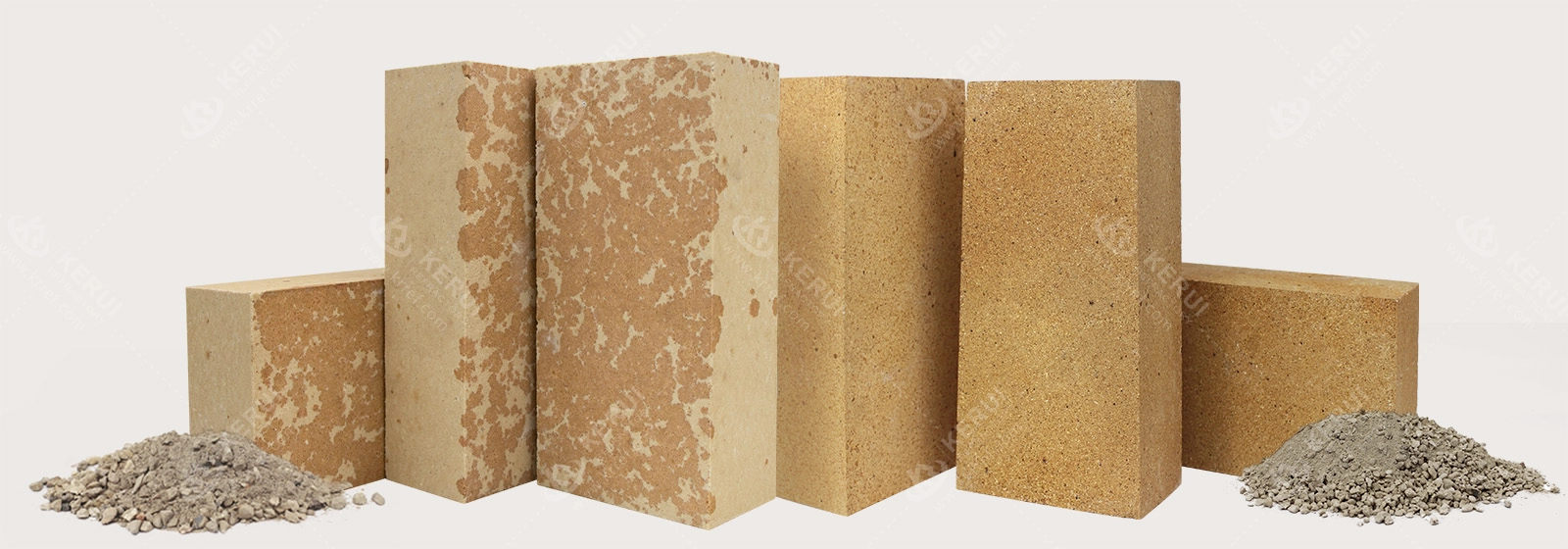
Main Types of Acidic Refractory Bricks
Silica bricks contain more than 93% SiO₂ and are among the most widely used acidic refractories in high-temperature industries. 1.
Key properties:
Excellent resistance to acidic slags
High refractoriness and load-bearing stability
Strong creep resistance in long-term operation
Typical applications:
Coke oven chambers
Glass furnace crowns
Hot blast stove checker chambers
These bricks are especially suitable for continuous operation above 1500°C, where structural stability is critical.
Fire clay bricks are based on Al₂O₃–SiO₂ systems, typically with moderate alumina content.
Key properties:
Stable performance in medium-temperature environments
Good thermal shock resistance
Cost-effective for large-scale furnace linings
Typical applications:
Boilers and industrial furnaces
Ceramic kilns
Backup lining systems
They are widely used as general-purpose refractories due to their balanced performance and affordability.
AZS bricks (Al₂O₃–ZrO₂–SiO₂) are advanced acidic refractories essential in the glass industry.
Key properties:
Excellent resistance to molten glass corrosion
Very low porosity and high density
Long service life in glass-contact zones
Typical applications:
Glass furnace sidewalls
Throat and melting zones
These materials play a critical role in ensuring glass quality and furnace longevity.
Acidic Monolithic Refractories
In addition to bricks, many furnaces use acidic monolithic materials for flexibility and easier installation.
Acidic castables are used in furnace roofs, burner zones, and irregular structures. After curing, they form a strong and continuous lining.
Ramming mass is typically silica-based and installed by compaction. It is widely used in induction furnaces and furnace bottoms, where dense, joint-free linings are required.
Mortar bonds acidic bricks and improves structural integrity and sealing performance, ensuring compatibility with silica-based materials.
As a full-range supplier, Kerui Refractory provides both shaped and monolithic acidic refractory solutions tailored to different industrial applications.
Performance Comparison: Bricks vs Monolithic Materials
Although both belong to acidic refractories, their performance differs due to structure and installation methods:
| Property | Acidic Bricks | Monolithic Refractories |
| Structure | Pre-shaped | Joint-free |
| Installation | Slower, masonry-based | Faster, flexible |
| Mechanical Strength | High and stable | Depends on curing |
| Thermal Shock Resistance | Moderate | Generally better |
| Maintenance | Replacement required | Easy repair and patching |
Engineering insight:
Bricks are preferred for load-bearing structures and long-term high-temperature zones
Monolithic materials are better for complex geometries, sealing, and repairs
In most furnaces, a combined lining system provides the best balance between durability and efficiency.
Industrial Applications
Acidic refractories are essential in multiple industries:
- Glass industry: AZS and silica bricks for corrosion resistance
- Coke ovens: silica bricks for structural stability
- Ceramic kilns: fire clay bricks and castables
- Induction furnaces: acidic ramming mass
Their effectiveness depends on maintaining compatibility with acidic slag environments.
Matching Refractory Chemistry With Real Furnace Needs
Even within acidic refractories, materials such as silica bricks, fire clay bricks, AZS bricks, and monolithic refractories behave differently depending on operating conditions. A well-designed lining system often combines these materials to achieve better performance.
Rather than focusing only on specifications or price, selecting refractories based on temperature, slag chemistry, and mechanical conditions ensures longer service life and stable operation.
With experience in furnace lining systems, Kerui Refractory helps customers design optimized acidic refractory solutions that deliver reliability, efficiency, and reduced maintenance over time.


