


Zircon-Based Refractory Bricks
Zircon-based refractory bricks are designed for molten glass, high-temperature, and chemically aggressive environments. They offer excellent corrosion resistance, thermal stability, and long service life, for glass furnaces and other demanding applications.
-
40–95
ZrO₂ Content(%)
-
3.0–5.8
Bulk Density (g/cm³)
-
90-150
Compressive Strength (MPa)
-
≥1700
Refractoriness (°C)

 Slide content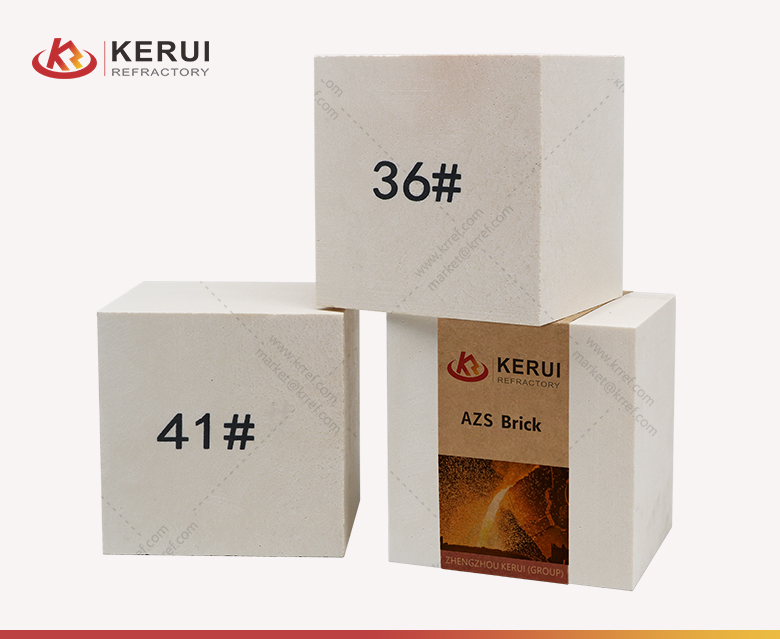
What are Zircon-Based Refractory Bricks?
Zircon-based refractory bricks are a group of materials made from zircon (ZrSiO₄) and zirconia (ZrO₂), including both sintered and fused cast products. They are widely used in glass furnaces, non-ferrous metallurgy, and chemical industries, where resistance to molten glass corrosion, thermal shock, and structural stability is critical.


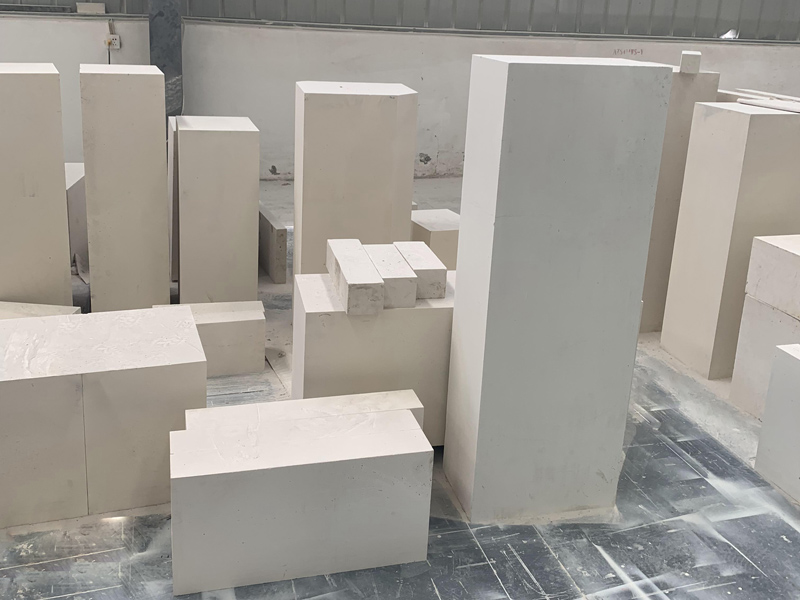
Types of Zircon-Based Refractory Bricks
Zircon & Zirconia Bricks (Pure Zircon System)
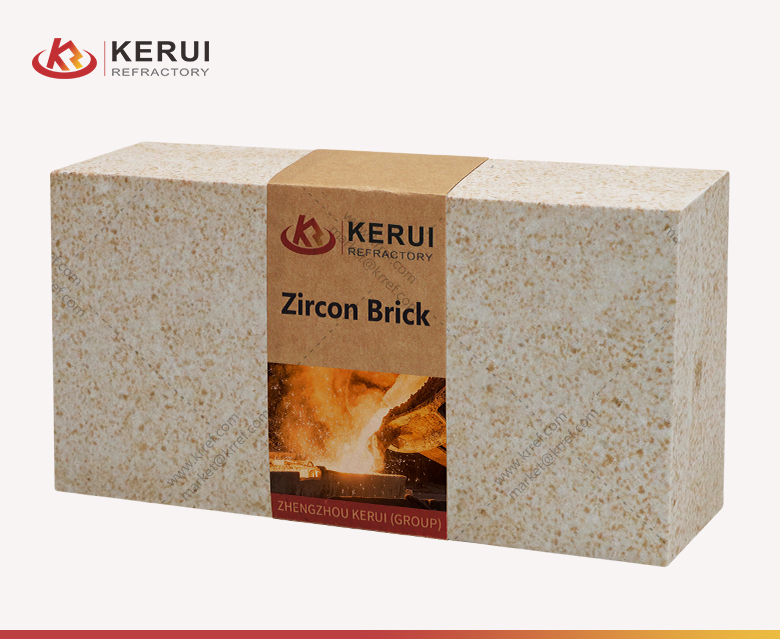
1. Zircon Brick (ZrSiO₄)
General-purpose brick for standard glass furnace applications
2. High Zircon Brick
Improved ZrO₂ content for better corrosion resistance
3. Calcium Zirconate Brick
Designed for alkali-rich glass environments
4. Yttria-Stabilized Zirconia (YSZ)
Ultra-high corrosion resistance for extreme conditions
Tips: Best suited for corrosion-dominant glass furnace zones
Zircon Composite Bricks
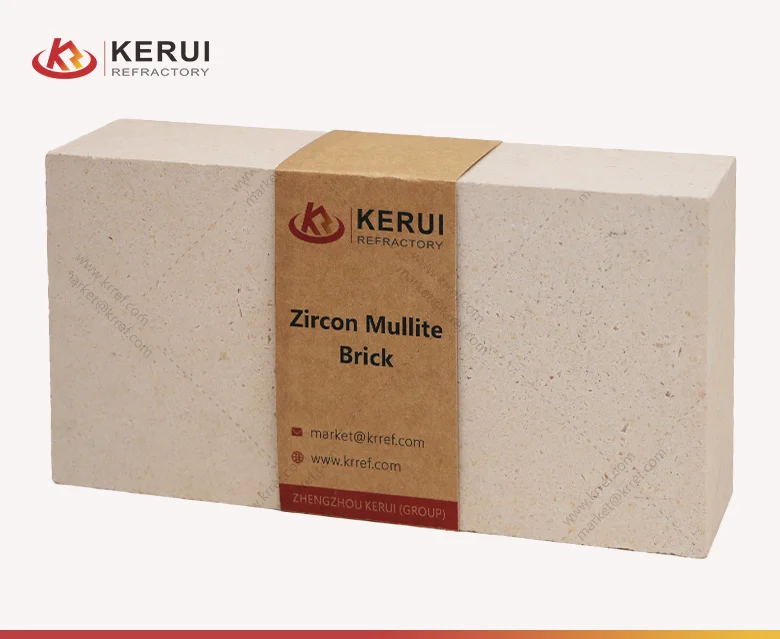
Excellent thermal shock resistance, suitable for temperature fluctuation areas
2. Sintered Zircon-Alumina Brick (Sintered AZS)
Balanced performance of strength and corrosion resistance
Tips: Best suited for thermal stress and fluctuating temperature zones
Fused Cast Zircon Bricks
1. Fused Cast AZS Brick (33 / 36 / 41)
Standard materials for glass contact zones with high density and corrosion resistance
2. Fused High Zirconia Brick
Premium solution for extreme corrosion and long campaign life
Tips: Best suited for direct molten glass contact areas
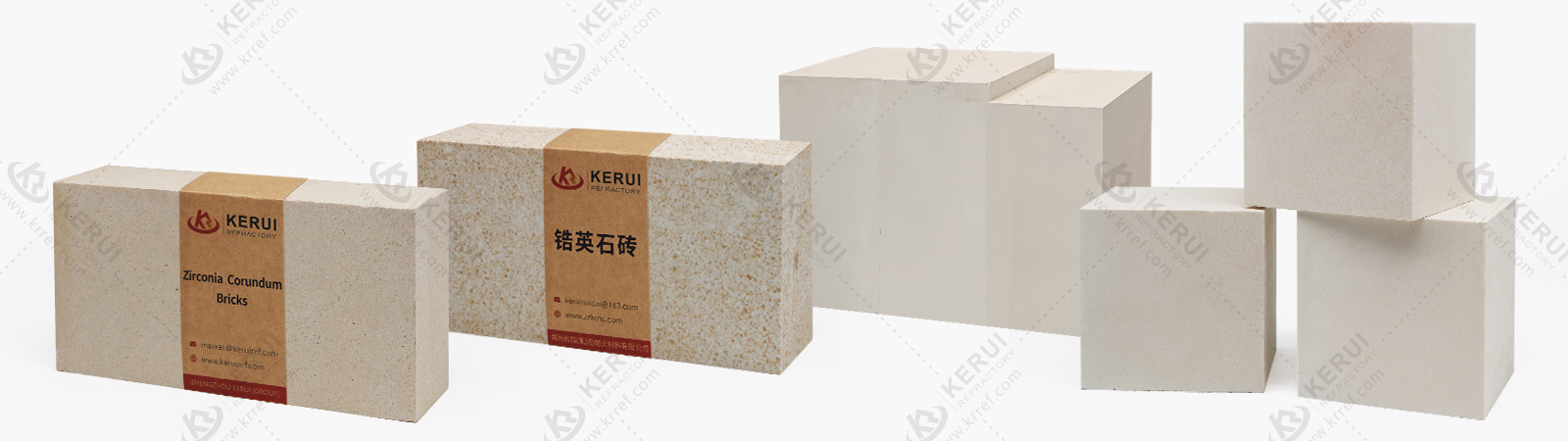
Technical Data Comparison
| Property | Zircon Brick | High Zircon | Ca-Zirconate | YSZ Brick | Zircon-Mullite | Sintered AZS | AZS-33 | AZS-36 | AZS-41 | Fused Zirconia |
|---|---|---|---|---|---|---|---|---|---|---|
| ZrO₂ (%) | ≥60 | ≥65 | ≥50 | ≥90 | ≥40–50 | ≥30–40 | ~33 | ~36 | ~41 | ≥90–95 |
| Al₂O₃ (%) | ≤5 | ≤5 | ≤5 | — | ≥40 | ≥45 | Balance | Balance | Balance | — |
| Bulk Density | 3.6–3.8 | 3.7–3.9 | 3.8–4.0 | 5.5–6.0 | 3.0–3.3 | 3.1–3.4 | 3.4–3.6 | 3.5–3.7 | 3.6–3.8 | 5.2–5.8 |
| Porosity | ≤18% | ≤15% | ≤15% | ≤10% | ≤20% | ≤18% | ≤2% | ≤2% | ≤2% | ≤1% |
| Strength | ≥100 MPa | ≥120 MPa | ≥110 MPa | ≥150 MPa | ≥90 MPa | ≥100 MPa | ≥150 MPa | ≥150 MPa | ≥150 MPa | ≥150 MPa |
| Thermal Shock | Good | Medium | Medium | Medium | Excellent | Good | Medium | Medium | Low | Low |
| Corrosion | High | Very High | Very High | Excellent | High | High | Very High | Excellent | Outstanding | Outstanding |
| Structure | Sintered | Sintered | Sintered | Sintered | Sintered | Sintered | Fused | Fused | Fused | Fused |
| Cost Level | Medium | Medium-High | High | Very High | Medium | Medium | High | High | Very High | Extremely High |
Applications & Application Systems
Zircon-based refractory bricks are widely used in glass furnaces and high-corrosion environments, where materials must withstand molten glass erosion, thermal stress, and chemical attack. Based on different working conditions, their applications can be divided into two major systems, each with distinct performance requirements and material selections.
Glass Furnace & Metallurgical Applications
This is the primary application field of zircon-based refractories, especially in glass melting furnaces, where materials are exposed to molten glass, high temperatures, and continuous operation.
Typical Applications
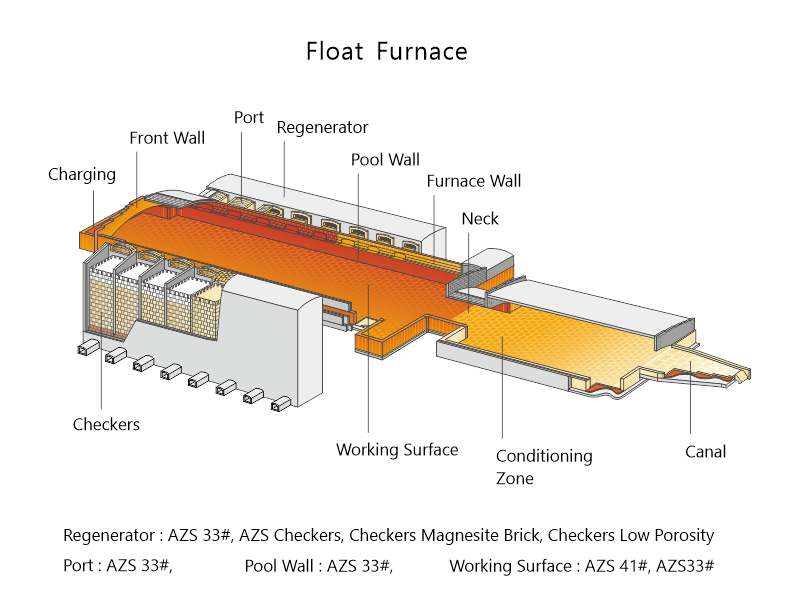
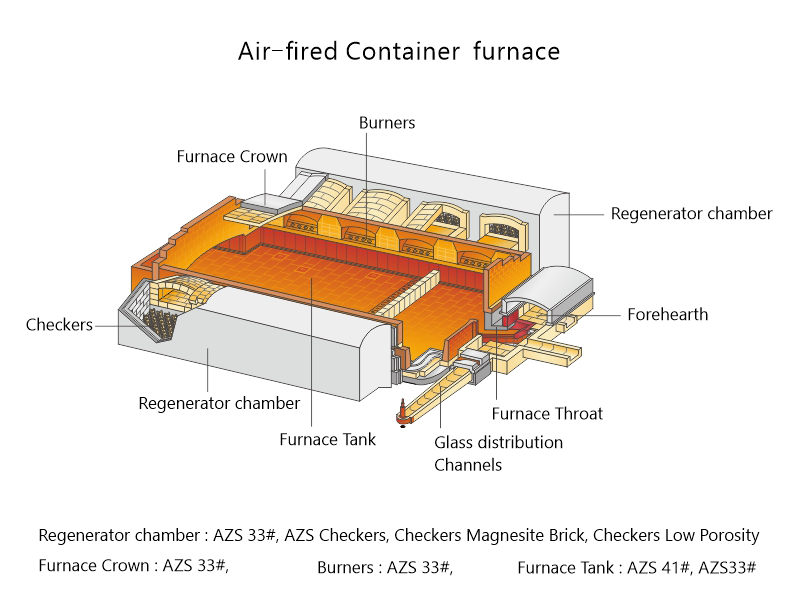
1. Glass Furnace Tank & Sidewall: Requires excellent corrosion resistance and low glass contamination during continuous operation
2. Furnace Bottom: Requires stable structure and strong resistance to molten glass penetration over time
3. Working End & Feeder Channel: Requires stable performance under thermal cycling and chemical fluctuation conditions
4. Regenerator & Checker Chamber: Requires durability against high-temperature cycling and aggressive chemical vapors
&
Strong resistance to molten glass corrosion
Low porosity to prevent glass penetration
High thermal stability under continuous operation
Compatibility with various glass types
Recommended Materials
Zircon Brick / High Zircon Brick
Zircon-Mullite Brick (thermal shock zones)
Fused Cast AZS-33/36/41 (glass contact areas)
Fused Zirconia Brick for corrosion zones
Tips: Proper material selection by furnace zone is critical to extending furnace campaign life.
High Corrosion Chemical Applications
In addition to glass furnaces, zircon-based bricks are also used in chemical and high-corrosion environments, where resistance to acid, alkali, and aggressive media is required.
Chemical reactors and vessels
Acid and alkali storage tanks
Petrochemical equipment linings
High-corrosion industrial kilns
Excellent acid and alkali resistance
Low permeability against penetration
Stable mechanical strength and durability
Long service life in corrosive conditions
High Zircon Brick
Calcium Zirconate Brick
Yttria-Stabilized Zirconia Brick
Fused High Zirconia Brick
Tips: Ideal for environments where chemical corrosion is more critical than thermal load.
Glass Furnace Material Selection & Advantages
Different furnace zones require different zircon-based materials to achieve the best balance of corrosion resistance, thermal stability, and service life:
- Crown: Silica Brick / Zircon-Mullite (better thermal shock resistance)
- Sidewall (Glass Contact): AZS-36 / AZS-41 (excellent corrosion resistance)
- Bottom: Dense Zircon Brick (low permeability, stable structure)
- Working End: High Zircon / AZS (balanced performance and durability)
Zircon-based refractories offer excellent resistance to molten glass corrosion, low thermal expansion, good thermal shock resistance, and high refractoriness, ensuring reliable performance under continuous high-temperature operation.
Tips: Selecting the right material based on furnace zone and working conditions can significantly improve furnace life while optimizing overall cost.
How to Choose & Installation Zircon-Based Bricks
Selecting the right zircon-based refractory depends on the furnace zone, glass composition, operating temperature, and corrosion level. Proper installation and material matching are equally important to ensure structural stability, corrosion resistance, and long service life under continuous high-temperature operation.
1. How to Choose
Glass contact → AZS / High Zircon
Thermal cycling → Zircon-Mullite
Chemical corrosion → Zirconia Brick
Medium → Zircon Brick
High → Calcium Zirconate
Extreme → Fused Zirconia / YSZ
Cost-effective → Zircon Brick
Balanced → AZS-33 / 36
Premium → AZS-41 / Zirconia
2.Installation & Supporting Materials
Dry laying with expansion allowance
Zoned installation based on furnace design
Refractory mortar
Insulation backing materials
Full range of zircon-based refractory bricks
Customized shapes and sizes
Matching materials and technical support
Tip: Helping you achieve reliable performance with one-stop procurement.
Why Choose Kerui Refractory
Kerui Refractory provides a complete range of zircon-based refractory solutions for glass furnaces and high-corrosion applications, including zircon bricks, zircon composite bricks, fused cast AZS bricks, and customized refractory products.
With extensive project experience, strict quality control, and stable raw material sourcing, we help customers achieve longer furnace life, improved operating stability, and optimized refractory cost performance.
What We Provide
| Product & Supply | Technical & Service |
|---|---|
| Full range of zircon-based refractory bricks | Technical support for material selection |
| Customized shapes and furnace zone matching | Installation and lining solution support |
| Supporting refractory and insulation materials | Stable production capacity and global delivery |
Tell us your furnace type, temperature, and working conditions, and we will recommend the most suitable refractory solution within 24 hours.


