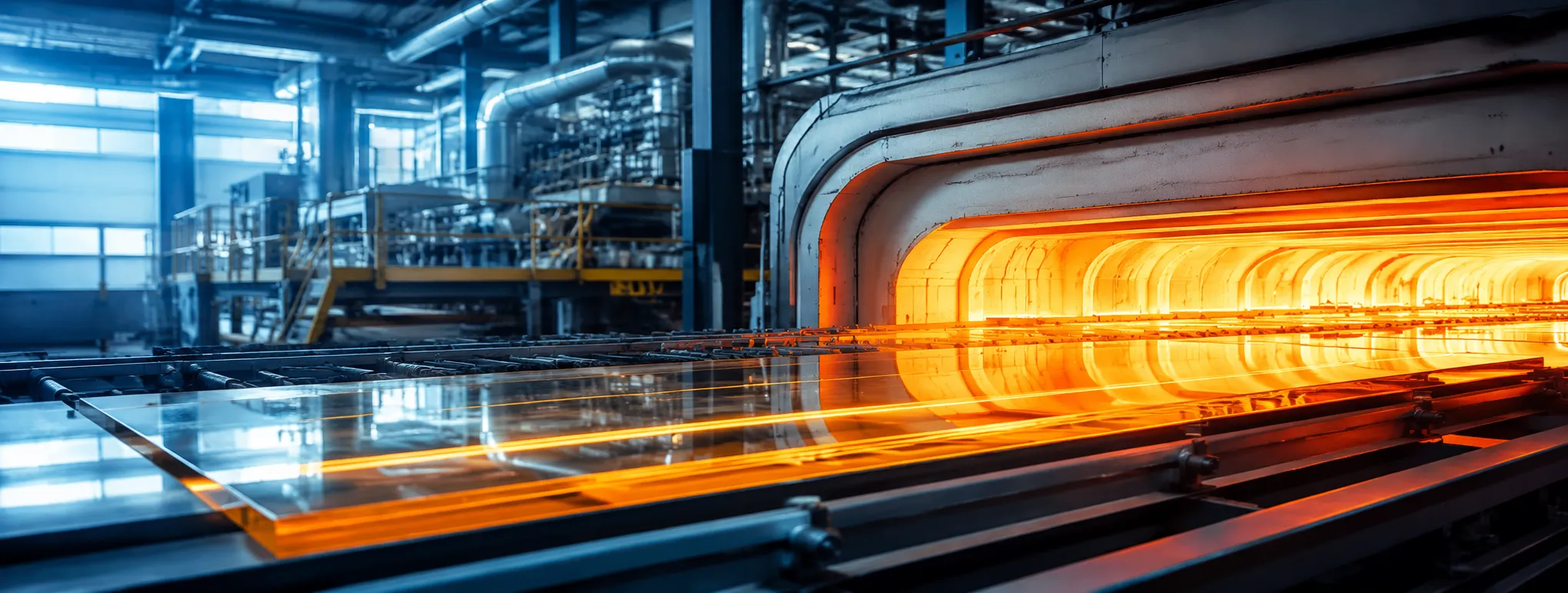
Five Glass Furnace Types Covered on This Page
End-Fired Glass Furnace
Commonly used for container glass, daily-use glass and medium or small glass production lines. Key areas include the charging end, melting tank, ports and regenerators.
Side-Fired Glass Furnace
Commonly used for float glass and large glass tank furnaces. Key refractory areas include the crown, breast wall, sidewall, bottom and regenerators.
Oxy-Fuel Glass Furnace
High combustion temperature and strong alkali vapor corrosion make the crown, breast wall, glass contact line and throat especially important.
Electric Glass Furnace
Often used for specialty glass, borosilicate glass and glass fiber. Electrode blocks, sidewalls, bottom blocks and flow channels require stable refractories.
Crucible Furnace
Suitable for art glass, small-batch glass and specialty glass production. This section can support long-tail product keywords.
Glass Furnace Diagrams with Refractory Area Markings

Superstructure: High-purity Silica Bricks
Melting Tank: AZS-33# Bricks
Working Tank: Fused α-Al₂O₃ Bricks
Regenerator: Silica Bricks
Flue: Fireclay Bricks
Refractories for End-Fired Glass Furnaces
In an end-fired furnace, flame enters from one end and returns in a U-shaped path. The port area, melting tank sidewalls, bottom and regenerators are key refractory zones.
- Superstructure: High-purity Silica Bricks, Fused AZS-31#/33#/36#/41# Bricks, Fused β-Al₂O₃ Bricks
- Melting Tank: AZS-33# Bricks, Fused Zirconia Mullite Bricks, Large Fireclay Bricks
- Working Tank: Fused α-Al₂O₃ Bricks, Fused AZS Bricks, Silica Bricks, β-Al₂O₃ Bricks, Sintered Mullite Bricks
- Regenerator: Silica Bricks, Magnesia Chrome Bricks, High Alumina Bricks, Fireclay Bricks, Magnesia Bricks
- Flue: Fireclay Bricks

Batch Charging System: AZS-36# AZS Bricks
Melting Tank: 33# Oxidation-Process Fused AZS Bricks
Throat: Shrinkage-Free Fused Cast AZS Bricks
Working Tank & Channels: Fused α-Al₂O₃ Bricks
Port System: Fused AZS Bricks
Regenerator: Silica Bricks
Flue: Fireclay Bricks
Refractories for Side-Fired Glass Furnaces
Side-fired furnaces are widely used in large tank furnaces. They require strong refractory design for crowns, breast walls, sidewalls and regenerators.
- Batch Charging System: AZS-36# AZS Bricks, Silica Bricks
- Melting Tank: 33# Oxidation-Process Fused AZS Bricks, AZS-36# Bricks, Silica Bricks
- Throat: Shrinkage-Free Fused Cast AZS Bricks
- Working Tank & Channels: Fused α-Al₂O₃ Bricks, Silica Bricks, β-Al₂O₃ Bricks, 33# Fused Cast Zirconia Corundum Bricks / Sintered Zircon Bricks
- Port System: Fused AZS Bricks, Fused β-Al₂O₃ Bricks, Silica Bricks
- Regenerator: Silica Bricks, Magnesia Chrome Bricks, High Alumina Bricks, Magnesia Bricks, Fireclay Bricks
- Flue: Fireclay Bricks, Castables

Batch Charging System: Low-seepage Fused-cast AZS Bricks
Melting Tank: Fused-cast AZS bricks (33#/41#)
Throat: Cavity-free Fused Cast Zirconia Corundum Bricks
Working Tank & Channels: Fused Cast α-Al₂O₃ Bricks
Flue: Fireclay Bricks
Refractories for Oxy-Fuel Glass Furnaces
Oxy-fuel furnaces have high combustion efficiency, but temperature and alkali vapor corrosion are concentrated. Crown, breast wall, glass contact line and throat materials need higher stability.
- Batch Charging System: Low-seepage Fused Cast AZS Bricks; AZS 36# AZS Bricks
- Melting Tank: Fused-cast AZS Bricks (33#/41#); Fused Cast Alumina Bricks
- Throat: Cavity-free Fused Cast AZS Bricks
- Working Tank & Channels: Fused Cast α-Al₂O₃ Bricks; Fused Cast α-β Alumina Bricks
- Flue: Fireclay Bricks, Castables

Superstructure: High Alumina Bricks/Fireclay Bricks
Melting Tank: AZS-33#/36#/41# Bricks
Working Tank/Cooling Section: Fused Cast α-β Alumina Bricks
Forehearth/Feeder Channel: Fused Cast α-β Alumina Bricks
Refractories for Electric Glass Furnaces
Electric furnaces are often used for specialty glass. Refractory selection must control glass contamination and support stable operation near electrode openings.
- Superstructure: High Alumina Bricks/Fireclay Bricks; Fused Cast AZS Bricks/Fused Cast Alumina Bricks
- Melting Tank: AZS-33#/36#/41# Bricks; High-quality Fireclay Bricks & Insulation Bricks
- Working Tank/Cooling Section: Fused Cast α-β Alumina Bricks; β-Alumina Bricks
- Forehearth/Feeder Channel: Fused Cast α-β Alumina Bricks

Furnace Roof: High Alumina Bricks/Fireclay Bricks
Crucible: Clay Crucibles, High Alumina Crucibles
Furnace Bottom: Large Fused Cast AZS Bricks
Furnace Columns: High Alumina Bricks
Furnace Walls: Standard Fireclay Bricks
Refractories for Crucible Furnace
- Furnace Roof: High Alumina Bricks/Fireclay Bricks
- Crucible: Clay Crucibles, High Alumina Crucibles, Fused Silica Crucibles
- Furnace Bottom: Large Fused Cast AZS Bricks
- Furnace Columns: High Alumina Bricks
- Furnace Walls: Standard Fireclay Bricks, Precast Plastic Refractory Blocks
Comparison of Major Glass Furnace Types and Refractory Requirements
| Comparison | End-Fired Furnace | Side-Fired Furnace | Oxy-Fuel Furnace | Electric Furnace | Crucible Furnace |
|---|---|---|---|---|---|
| Heating Method | Air-fuel combustion with reversing | Air-fuel combustion | Oxygen-fuel combustion | Electric heating | Gas or electric heating |
| Regenerator | Yes | Yes | No | No | No |
| Typical Crown Material | High-purity Silica Brick | Premium Silica Brick | Fused-cast AZS / α-β alumina / spinel brick | High alumina / fireclay brick | Refractory brick |
| Key Refractory Challenges | Flame erosion; thermal shock from reversing | Flame erosion; alkali dust attack | High alkali vapor and steam exposure | Electrode corrosion; glass contamination | Thermal shock; crucible replacement |
| Refractory Cost | Medium | High | Highest in upper structure | Medium | Low; crucible is the key component |
Recommended Refractories for Key Components of Glass Furnaces
| Furnace Type | Key Components | Common Refractories | Recommended Refractories |
|---|---|---|---|
| End-Fired Furnace | Furnace Melting tank, crown, regenerator | Tank wall: AZS-33; Crown: silica brick; Checkerwork: magnesia-chrome brick |
Tank wall: shrinkage-free AZS-41; Crown: high-density silica brick; Checkerwork: direct-bonded magnesia-chrome / high-purity magnesia brick |
| Side-Fired Furnace | Melting tank, crown, breastwall, regenerator, ports | Tank wall: AZS-33; Crown: silica brick; Checkerwork: magnesia / magnesia-chrome brick |
Tank wall: 30% Cr₂O₃ chrome-zirconia-alumina brick; Crown: premium silica brick; Checkerwork: magnesia-zirconia / fused-cast mullite brick |
| Oxy-Fuel Furnace | Melting tank, crown, breastwall, sidewalls | Crown: fused-cast AZS / alumina; Tank wall: AZS-33–41 |
Crown & breastwall: fused-cast α-β alumina or ER1851 AZS; Tank wall: high-zirconia ER1195 |
| Electric Furnace | Melting tank, electrodes, throat, upper structure | Tank/electrodes: AZS-41; Crown: high alumina / fireclay brick | Tank/electrodes: shrinkage-free AZS-41; Crown: high alumina brick; Cooling section: α-β alumina brick |
| Crucible Furnace | Crucible, furnace lining | Crucible: clay-kaolin / fused silica; Lining: fireclay brick |
Crucible: fused silica / high alumina / platinum, depending on glass; Lining: high-grade high alumina brick + lightweight insulation |
Common Refractory Products for Glass Furnaces
Glass Furnace Refractory FAQs
What refractory material is commonly used for glass furnace sidewalls?
Glass furnace melting tank sidewalls commonly use fused cast AZS brick because this area is exposed to high-temperature glass liquid and requires strong resistance to corrosion and erosion.
Why is silica brick commonly used for glass furnace crowns?
Glass furnace crowns operate at high temperature and carry structural load. High-quality silica brick provides good refractoriness under load and high-temperature volume stability.
Where are AZS 33#, AZS 36# and AZS 41# used?
AZS 33# is often used in general glass contact areas, AZS 36# is suitable for stronger corrosion zones such as sidewalls and glass contact lines, and AZS 41# is commonly used in critical areas such as throats and flow channels.
How should regenerator checker bricks be selected?
Regenerator checker bricks should be selected according to flue gas temperature, dust composition, blockage risk and heat exchange efficiency. Common options include high alumina, magnesia-alumina, magnesia and mullite checker bricks.
What is the difference between end-fired and side-fired furnace refractory design?
End-fired furnaces focus more on the end port area, regenerators and flame return zone. Side-fired furnaces are usually larger and require stronger overall refractory design for the crown, breast wall, sidewall and regenerators.


