Basic refractory materials play an essential role in high-temperature industrial processes, particularly in environments containing alkaline slags and aggressive chemical reactions. These materials offer excellent resistance to basic slags and maintain stability at extreme temperatures, making them widely used in industries such as steelmaking, non-ferrous metallurgy, and cement production.
Unlike acidic or neutral refractories, basic refractories typically contain large amounts of magnesia (MgO) or dolomite (CaO·MgO). These components allow the materials to withstand corrosive furnace atmospheres where many other refractory types would rapidly degrade.
Understanding the main types of basic refractories helps users choose materials that deliver longer service life and stable furnace operation.
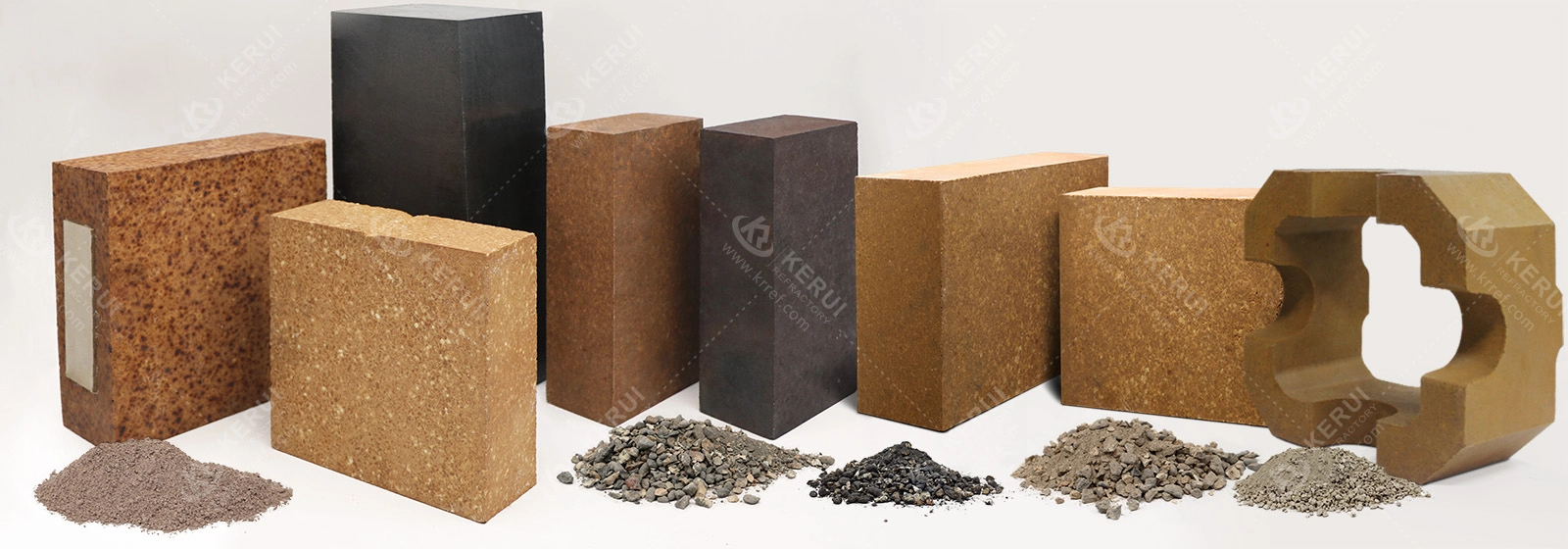
What Are Basic Refractory Materials?
Basic refractories are materials designed to resist alkaline slags and basic environments. Their chemical composition generally includes high levels of magnesium oxide (MgO) or calcium oxide (CaO).
Typical characteristics include:
High refractoriness at elevated temperatures
Excellent resistance to basic slag corrosion
Strong structural stability under heavy loads
Good compatibility with steelmaking environments
Because steelmaking slags are highly basic, magnesia-based refractories have become indispensable in modern metallurgical furnaces.
Manufacturers such as Kerui Refractory provide a variety of basic refractory products designed for different furnace conditions and lining structures.
Main Types of Basic Refractory Bricks
Magnesia bricks are produced mainly from sintered or fused magnesia and usually contain more than 85% MgO.
Key advantages:
Excellent resistance to basic slags
High refractoriness under load
Good thermal stability
Typical applications include electric arc furnaces, steel converters, ladles, and cement kiln burning zones.
Magnesia chrome bricks combine magnesia with chromium oxide, improving corrosion resistance and high-temperature stability.
They provide:
Strong resistance to aggressive slags
Good structural integrity under thermal cycling
These bricks are commonly used in non-ferrous smelting furnaces and copper converters.
Dolomite bricks contain CaO and MgO, giving them excellent compatibility with steelmaking slags.
Advantages include:
High resistance to alkaline slags
Good cost-performance ratio
Dolomite refractories are widely used in steel converters and secondary refining furnaces. However, they require proper storage because they can react with moisture.
Magnesia carbon bricks combine magnesia and graphite, significantly improving thermal shock resistance.
Key properties include:
Excellent resistance to thermal spalling
Strong resistance to slag penetration
High mechanical strength at elevated temperatures
They are widely used in steel ladles, electric arc furnaces, and basic oxygen furnaces.
Basic Monolithic Refractories
In addition to shaped bricks, many furnaces use monolithic basic refractories, which are installed without firing.
Common types include:
Magnesia castables provide high refractoriness and good slag resistance. They are often used in furnace repairs and complex structural areas where brick installation is difficult.
2. Ramming Mass
Ramming mass is a dry refractory material compacted during installation. It forms dense linings that resist molten metal attack and is commonly used in induction furnaces.
Gunning materials allow fast furnace repair through pneumatic spraying. Steel plants often use them to extend furnace campaign life and reduce downtime.
Properties Comparison of Basic Refractories
| Material System | Main Composition | Key Characteristics | Typical Application |
| Magnesia Materials | MgO ≥85% | High refractoriness, strong resistance to basic slag, good load-bearing capacity | Steel furnaces, cement kilns |
| Magnesia Chrome Materials | MgO + Cr₂O₃ | Excellent corrosion resistance, good thermal stability, resistance to aggressive slags | Non-ferrous smelting, copper furnaces |
| Dolomite Materials | CaO + MgO | Strong compatibility with steel slag, cost-effective, good refining performance | Steel converters, ladles |
| Magnesia Carbon Materials | MgO + C | Excellent thermal shock resistance, low slag penetration, high durability in dynamic conditions | EAF, BOF, steel ladles |
This classification reflects how different material systems are designed to handle specific combinations of temperature, slag chemistry, and mechanical stress.
Same Material System: Shaped vs Monolithic Refractories
Within the same material system (e.g., magnesia-based), the choice between shaped bricks and monolithic refractories depends on structural and operational requirements.
| Factor | Shaped Refractories (Bricks) | Monolithic Refractories |
| Structure | Pre-fired, dense and stable | Installed in place (cast, rammed, or gunned) |
| Mechanical Strength | High | Moderate (depends on formulation) |
| Thermal Shock Resistance | Moderate | Generally better |
| Installation | Requires precise masonry | Flexible, suitable for complex shapes |
| Maintenance | Difficult to repair locally | Easy to repair and patch |
Selection Guidance Based on Material and Structure
- Select material system first (magnesia, dolomite, magnesia carbon) based on:
- Slag type (basic, acidic, aggressive)
- Operating temperature
- Chemical corrosion conditions
2. Then choose product form (brick or monolithic) based on:
- Furnace geometry
- Installation conditions
- Maintenance strategy
In most industrial furnace designs, engineers combine both approaches to build an optimized refractory lining system.
Suppliers such as Kerui Refractory typically recommend solutions based on material system + structure design, ensuring both durability and operational efficiency.


