Industrial boilers do not use one standard refractory lining. The required arrangement depends on the boiler structure, combustion method, fuel, gas flow, and the areas exposed to flame, ash, or moving particles.
In many water-cooled furnace designs, refractory protection is concentrated around openings, transitions, furnace bottoms, and other high-wear zones instead of covering the entire enclosure. CFB, grate-fired, biomass, and waste-heat boilers can have different lining demands because their fuel and operating conditions differ.
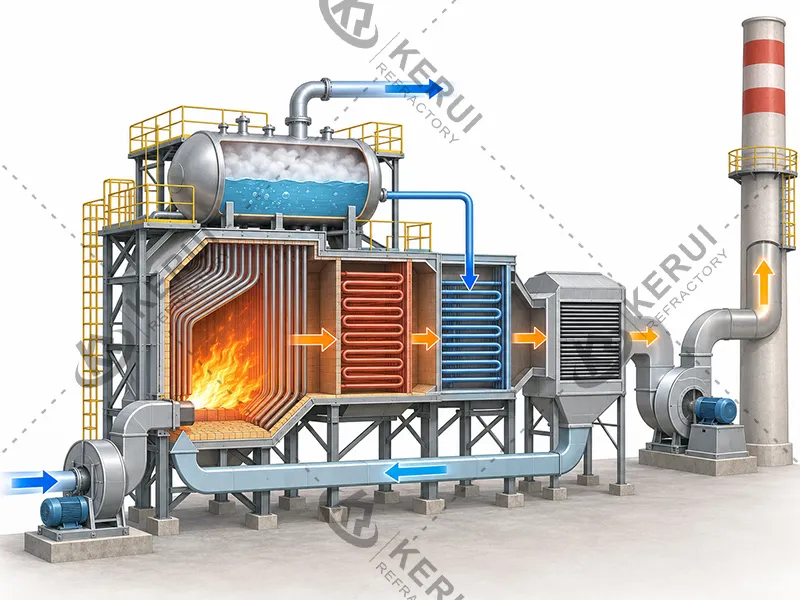
How Boiler Type Affects Refractory Lining
Boilers can be classified by structure, combustion method, fuel, or heat source. These categories can overlap: for example, a boiler may be water-tube, biomass-fired, and grate-combustion at the same time. For refractory planning, the boiler’s actual construction and operating conditions matter more than its label.
| Boiler configuration | Areas that may need refractory protection | Conditions to assess |
| Fire-tube boiler | Combustion chamber, burner throat, furnace front or rear, and gas-turning areas | Flame exposure, heat cycling, local wear |
| Water-tube or pulverized-coal boiler | Burner openings, furnace bottom, slag-related areas, and selected ducts | Localized heat, ash impact, gas flow |
| CFB boiler | Lower furnace, cyclone, return system, and solids-contact ducts | Abrasion, particle impact, lining stability |
| Grate-fired or biomass boiler | Grate surroundings, lower furnace, and ash-discharge sections | Fuel movement, ash chemistry, thermal cycling |
| Waste-heat boiler | Hot-gas inlet, transitions, and dust-laden passages | Gas temperature, velocity, dust and chemical composition |
The exact locations vary by boiler design. The table is a starting point for identifying areas that need review, not a substitute for an equipment drawing or operating data.
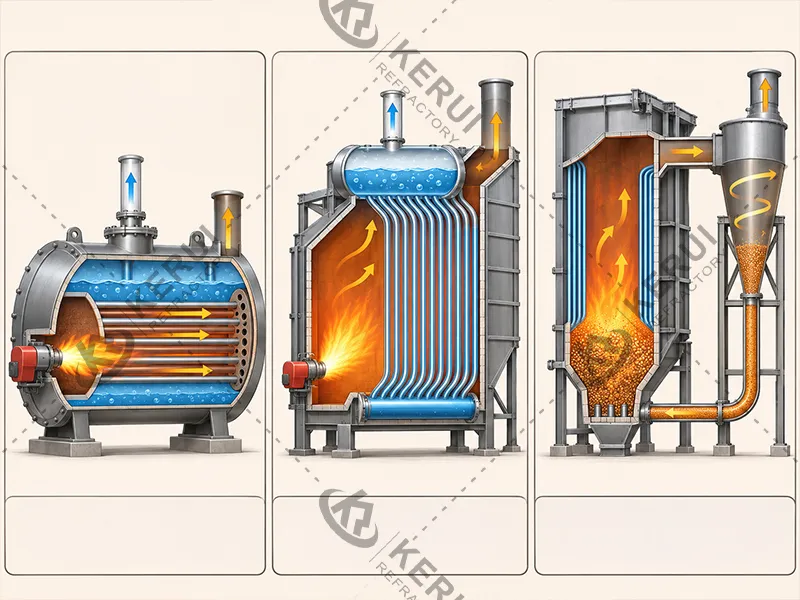
Refractory Lining Considerations by Boiler Type
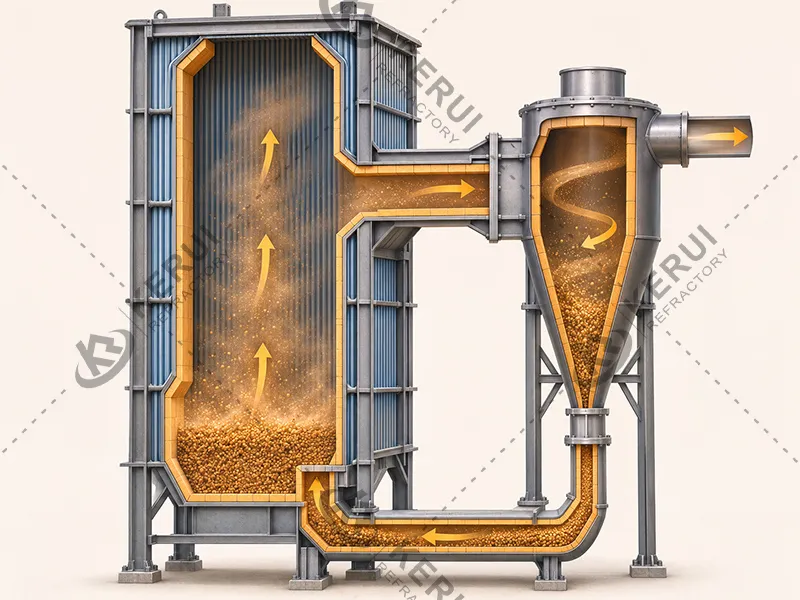
CFB Boilers
In a circulating fluidized bed boiler, bed material and fuel particles move through the furnace and associated circulation equipment. The lower furnace, cyclone, return leg, and connecting ducts may therefore face continuous abrasion and particle impact.
These zones often need a lining designed for wear resistance and mechanical stability. A wear-resistant refractory castable may be considered where the installation geometry and operating conditions support its use. The selection should also account for lining thickness, anchors, joints, curing, and controlled dry-out.
Pulverized-Coal and Water-Tube Boilers
Many large water-tube boilers use water-cooled walls to absorb heat from the furnace. As a result, the full furnace enclosure does not necessarily require a continuous refractory lining. Protection may instead be needed around burner openings, the furnace bottom, slag-related sections, and selected transitions.
The design should reflect local conditions. A burner throat, for instance, may experience different heat and gas-flow conditions from a downstream duct. Review each location separately rather than specifying one lining material for the entire boiler.
Grate-Fired and Biomass Boilers
Solid fuel moves through the combustion chamber in grate-fired systems. The grate area, lower furnace, and ash-discharge sections can be exposed to fuel movement, ash impact, and repeated heating and cooling.
Biomass adds another variable: ash composition differs by fuel and can affect deposits and chemical interaction with the lining. Material selection should be based on the actual fuel and ash data where available, rather than on the general label “biomass boiler.”
Waste-Heat Boilers
Waste-heat boilers receive hot gases from an upstream process. The inlet, transition sections, and connecting ducts may need protection where gas temperature, velocity, dust, or chemical composition creates a lining concern.
The gas stream can vary significantly between steel, cement, chemical, and other processes. For that reason, record the gas conditions at the relevant locations before choosing a lining configuration.
Fire-Tube Boilers
Fire-tube boilers commonly have a combustion chamber and gas passages where localized refractory protection may be used. The areas and lining arrangement depend on the boiler design, burner configuration, and manufacturer’s construction details.
For replacement or repair work, confirm the existing lining structure and dimensions before selecting a product. A general boiler description alone is not enough to specify the repair material.
Selecting Refractory Materials for Boiler Areas
Material selection should start with the service conditions at each location. Maximum temperature is important, but it is only one part of the assessment. Gas velocity, particle movement, ash chemistry, thermal cycling, mechanical loads, and installation access can all affect lining performance.
For irregular surfaces and complex shapes, castables can provide installation flexibility. Where a regular, stable structure is required, shaped bricks may be appropriate. Insulation may be installed behind a working lining or in designated sections, depending on the equipment design and heat-loss requirements.
Kerui’s refractory castable range includes several castable types. For projects where a high-alumina castable is being evaluated, see the high-alumina castable page. For shaped linings, see high-alumina refractory bricks. These pages describe product options; the appropriate grade still needs to be confirmed against the boiler’s working conditions.
Where insulation is required, high-alumina insulation bricks and ceramic fiber blankets may be reviewed as possible components of the lining structure. They should not be treated as interchangeable: the layer arrangement depends on temperature, space, mechanical conditions, and the system design.
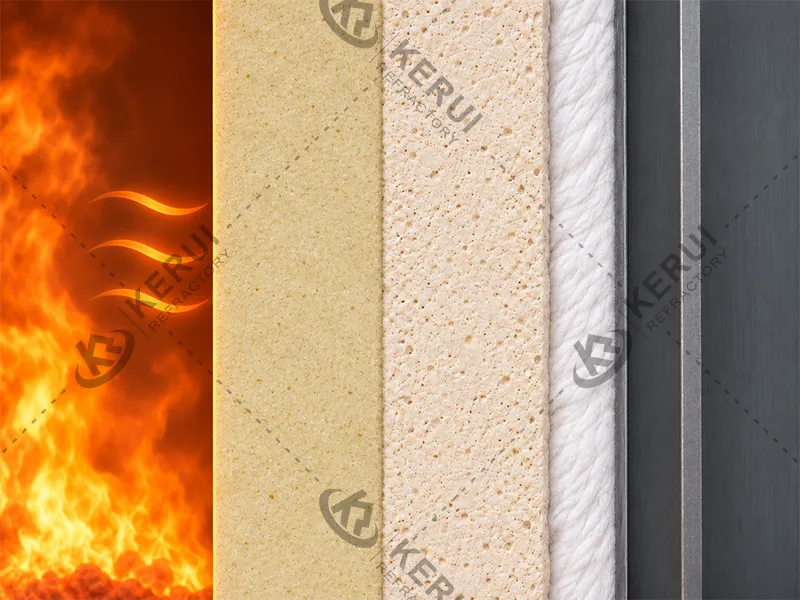
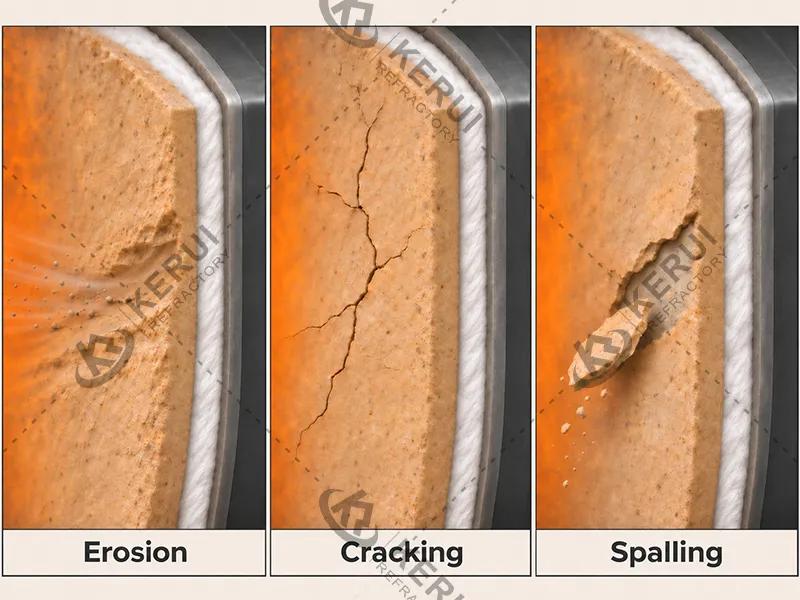
Common Causes of Boiler Refractory Damage
A suitable material can still fail early if the lining is exposed to conditions it was not designed for or if installation is inadequate. Common factors include:
- Abrasion and impact: Moving particles can wear the lining, particularly in CFB and solid-fuel systems.
- Thermal cycling: Repeated heating and cooling can contribute to cracking or spalling.
- Chemical interaction: Fuel ash or process-gas components may react with the refractory.
- Installation issues: Mixing, anchoring, lining thickness, curing, and dry-out all affect the finished lining.
- Joint or expansion problems: Poorly arranged joints can allow thermal stress to build up as the lining heats.
When assessing damage, record its location, appearance, operating history, and the surrounding lining structure. These details help distinguish between wear, thermal stress, chemical attack, and installation-related problems.
Information Needed to Specify a Boiler Lining
Before requesting a refractory recommendation, prepare the information available for the boiler and the target area:
- Boiler type and a drawing or photo of the area
- Fuel type and, where available, fuel ash or process-gas data
- Normal operating temperature and temperature changes
- Gas velocity, dust load, or particle movement
- Existing lining material, thickness, and anchoring details
- Location and appearance of previous damage
- Installation access, repair schedule, and inspection requirements
For a preliminary review, send the boiler type, fuel, target lining area, operating conditions, and any available drawings or site photos to Kerui Refractory. This information gives the technical discussion a specific starting point for evaluating lining options.


