Neutral refractory materials play a key role in industrial furnace linings because they maintain chemical stability in both acidic and basic environments. Unlike strictly acidic or basic refractories, these materials adapt well to complex or changing furnace conditions, making them widely used in industries such as steelmaking, cement, non-ferrous metallurgy, and waste treatment.
Kerui Refractory supplies a complete range of neutral refractory solutions, including high alumina bricks, chrome bricks, carbon bricks, silicon carbide products, and monolithic refractories, designed for different furnace zones and working conditions.
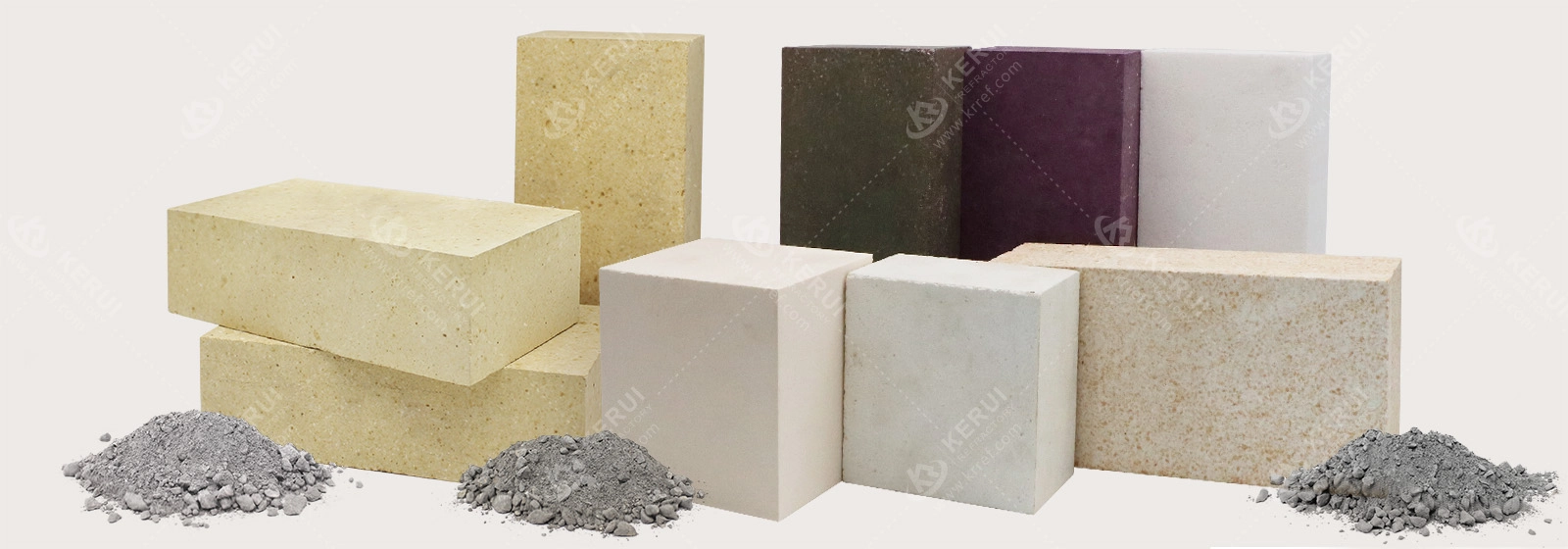
Main Types of Neutral Refractory Bricks
High alumina bricks are one of the most widely used neutral refractory materials. They typically contain 48–90% Al₂O₃, giving them excellent refractoriness and mechanical strength at elevated temperatures.
High alumina bricks typically contain 48–90% Al₂O₃ and offer balanced performance across multiple furnace conditions.
Applications
- Cement kilns
- Blast furnaces
- Reheating furnaces
- Lime kilns
Chrome bricks are based primarily on chromium oxide (Cr₂O₃) and offer strong resistance to chemical corrosion.
Applications
- Glass furnaces
- Non-ferrous smelting
- Cement kiln transition zones
Carbon Bricks
Carbon and graphite refractories perform best in reducing environments and molten metal contact zones.
Applications
- Blast furnace hearths
- Aluminum electrolysis cells
Silicon Carbide Refractories
Silicon carbide (SiC) materials are another important neutral refractory category known for their durability and thermal performance.
Applications
- Kiln furniture
- Incinerators
- High-wear zones
Neutral Monolithic Refractory Materials
In addition to shaped bricks, many furnace structures rely on monolithic refractories for flexible installation and easier maintenance.
High alumina castables are commonly used neutral monolithic refractories composed of alumina aggregates and refractory binders.
Easy installation
Good structural strength
Suitable for complex shapes
SiC castables improve abrasion resistance and thermal conductivity.
High wear resistance
Good thermal shock resistance
Ramming Mass (Neutral)
Neutral ramming materials are used in induction furnaces and high-wear zones.
Dense structure after compaction
Good resistance to molten metal
How to Choose Between Shaped and Monolithic Refractories
In real furnace design, the key decision is often not which material, but which form:
shaped bricks or monolithic refractories.
When to Use Shaped Refractory Bricks
Choose bricks when the furnace requires:
- High structural stability
- Precise geometry and controlled expansion joints
- Long-term operation with minimal deformation
- Strong load-bearing capacity
Typical zones include:
- Furnace walls and roofs
- Load-bearing structures
- High-temperature static areas
Bricks provide predictable performance and easier quality control, especially in large industrial furnaces.
When to Use Monolithic Refractories
Choose monolithic materials when the furnace involves:
- Complex shapes or irregular structures
- Frequent maintenance or repair requirements
- Limited installation space
- Need for joint-free linings
Typical zones include:
- Burner areas
- Furnace roofs with complex geometry
- Repair zones
- Localized wear areas
Monolithic refractories offer flexibility, faster installation, and reduced joint-related heat loss.
Combined Lining Design (Most Common Approach)
In most industrial furnaces, engineers do not choose one over the other—they combine both.
For example:
- Bricks for structural zones
- Castables for complex or high-wear areas
- Ramming materials for furnace bottoms
This hybrid approach improves:
- Overall lining stability
- Service life
- Maintenance efficiency
Manufacturers like Kerui Refractory typically recommend integrated lining solutions, rather than a single material, based on actual furnace conditions.
Key Factors for Material Selection
To select the right neutral refractory system, it is essential to evaluate:
Necessary information:
- Maximum operating temperature
- Slag or material composition
- Furnace type and working zone
Recommended information:
- Thermal cycling frequency
- Mechanical stress (abrasion, impact)
- Previous lining failure conditions
Providing accurate working conditions allows suppliers to recommend more precise and cost-effective solutions.
From Material Choice to System Design
Neutral refractories are not simply defined by composition—they are part of a complete furnace lining system. The real performance depends on how different materials are combined and applied.
Instead of focusing only on product types, engineers should consider how shaped bricks and monolithic refractories work together under real operating conditions.
If you are planning a new furnace lining or optimizing an existing system, the technical team at Kerui Refractory can help evaluate your application and recommend a tailored combination of neutral refractory bricks and monolithic materials to achieve longer service life and stable operation.


