Glass melting furnaces operate under extremely high temperatures and aggressive chemical conditions. The refractory lining is continuously exposed to molten glass corrosion, thermal shock, mechanical stress and high-temperature erosion.
Choosing the right refractory materials for different furnace zones is essential to improve furnace campaign life, maintain glass quality and reduce maintenance costs.


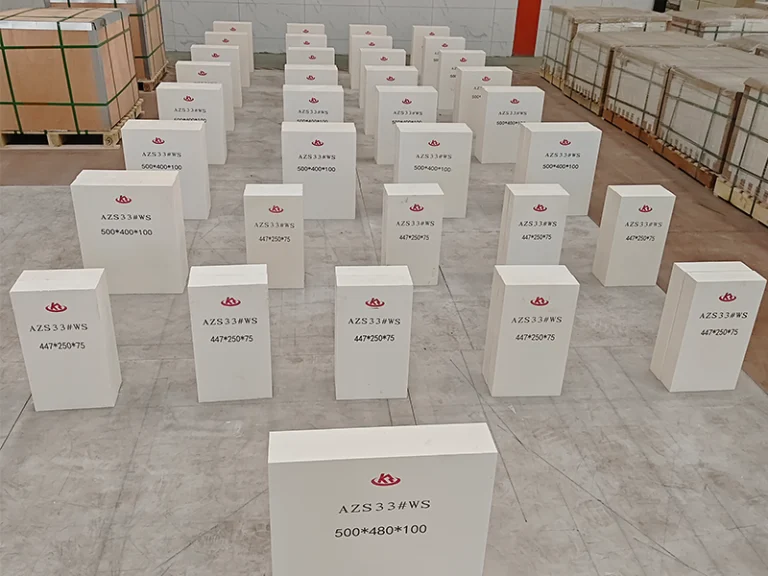
As a professional refractory manufacturer, Kerui Refractory provides customized glass industry refractory solutions including AZS bricks, silica bricks, high alumina bricks and ceramic fiber products for different types of glass furnaces.
For more information about our complete solutions, please visit our Glass Industry Refractory Solutions page.
Why Refractory Selection Matters in Glass Furnaces
Different areas of a glass furnace have different operating conditions.
For example:
- The furnace crown requires excellent thermal stability and resistance to temperature changes.
- The side walls and bottom are directly exposed to molten glass corrosion.
- Regenerators require materials with good volume stability under high temperature.
- Insulation areas focus more on reducing heat loss and improving energy efficiency.
Therefore, a single refractory material cannot meet the requirements of all furnace zones.
Main Refractory Materials Used in Glass Furnaces
AZS Brick (Alumina Zirconia Silica Brick)
AZS bricks are among the most widely used refractory materials in glass melting furnaces due to their excellent resistance to molten glass corrosion.
They are commonly applied in:
- Furnace side walls
- Glass contact areas
- Bottom structures
- Critical melting zones
AZS bricks provide:
- Excellent corrosion resistance
- Low glass contamination
- High temperature stability
For different glass furnace conditions, AZS bricks are available in different grades such as AZS 33, AZS 36 and AZS 41.
Silica Brick
Silica bricks are traditionally important refractory materials for glass furnace crowns and regenerators.
Their advantages include:
- High refractoriness
- Excellent structural stability
- Good resistance to thermal deformation
Typical applications:
- Furnace crown
- Regenerator chamber
- Upper furnace structure
Silica bricks are especially suitable for areas where high-temperature stability and dimensional accuracy are required.
High Alumina Brick
High alumina bricks are used in areas requiring good mechanical strength and wear resistance.
Typical applications include:
- Burner areas
- Supporting structures
- Auxiliary furnace sections
They provide:
- High strength
- Good thermal shock resistance
- Reliable performance in demanding conditions
Ceramic Fiber Products
Ceramic fiber products are mainly used for thermal insulation and energy-saving applications.
Common applications:
- Furnace insulation layers
- Expansion joints
- Maintenance insulation
Advantages:
- Low thermal conductivity
- Lightweight structure
- Excellent energy-saving performance
Refractory Materials Selection by Glass Furnace Zone
1. Furnace Crown
The furnace crown is exposed to high-temperature radiation and continuous thermal cycling. Refractory materials require excellent stability and resistance to deformation during long-term operation.
Recommended materials:
- Silica Brick
- High Alumina Brick
Key requirements:
- High refractoriness
- Low deformation
- Good thermal stability
2. Side Wall and Glass Contact Area
The side wall is directly exposed to molten glass and severe chemical corrosion. Refractory materials must provide excellent corrosion resistance and maintain long service life.
Recommended materials:
- AZS Brick
- Fused Cast AZS Brick
Key requirements:
- Strong corrosion resistance
- Low bubble and defect risk
- High structural stability
3. Furnace Bottom
The furnace bottom is continuously exposed to molten glass and mechanical stress during operation. Dense and stable refractory materials are required for reliable long-term performance.
Recommended materials:
- AZS Brick
- Fused Cast Refractory Materials
Key Requirements:
- Strong corrosion resistance
- High density and stability
- Long service life
4. Burner Port
The burner port area experiences high temperature, flame impact and rapid temperature changes. Refractory materials need strong thermal resistance and mechanical strength.
Recommended materials:
- AZS Brick
- High Alumina Brick
Key requirements:
- Excellent thermal shock resistance
- High mechanical strength
- Resistance to flame erosion
5. Regenerator
The regenerator undergoes repeated heating and cooling cycles during furnace operation. Materials require excellent thermal stability and resistance to temperature fluctuations.
Recommended materials:
- Silica Brick
- High Alumina Brick
Key requirements:
- Good thermal shock resistance
- Excellent volume stability
- Resistance to temperature fluctuations
6. Insulation Areas
These areas focus on reducing heat loss and improving furnace energy efficiency. Lightweight refractory materials are selected for insulation and thermal protection applications.
Recommended Materials:
- Ceramic Fiber Products
- Lightweight Insulation Materials
Key requirements:
- Low thermal conductivity
- Lightweight structure
- Excellent insulation performance
How to Choose the Right Glass Furnace Refractory Materials?
The selection of refractory materials depends on several factors:
Glass Type
Different corrosion requirements:
- Float glass
- Container glass
- Fiber glass
- Specialty glass
Furnace Design
Material selection also depends on furnace type:
- End-fired furnace
- Side-fired furnace
- Oxy-fuel furnace
- Electric melting furnace
Operating-Temp & Service Conditions
Important factors include:
- Melting temperature
- Glass composition
- Furnace campaign period
- Maintenance requirements
A professional refractory supplier can recommend suitable materials based on actual operating conditions.
Kerui Refractory Solutions for Glass Furnaces
Kerui Refractory supplies high-performance refractory materials for glass production applications.
Our products include:
- AZS bricks
- Silica bricks
- High alumina bricks
- Ceramic fiber products
- Monolithic refractory materials
With experience in high-temperature industries, Kerui provides reliable refractory solutions for glass manufacturers worldwide.
Explore our complete:
Glass Industry Refractory Solutions
Related Articles:
AZS 33 / AZS 36 / AZS 41: Application Differences in Different Glass Furnace Zones
What’s the Effect of Using AZS Bricks on Glass Kilns


