Rock wool furnaces operate under continuous high-temperature conditions and are exposed to severe slag corrosion, thermal shock, molten material erosion, and mechanical wear. Because raw materials such as basalt, dolomite, and industrial slag often have unstable chemical compositions, the furnace lining is under constantly changing chemical and physical stress.
A properly designed refractory lining system is essential to ensure stable production, extend furnace campaign life, and reduce maintenance downtime. As a professional refractory manufacturer, Kerui Refractory provides customized refractory solutions for rock wool furnaces, including design, material supply, and technical support.

What Are the Most Easily Damaged Areas in a Rock Wool Furnace?
The most vulnerable areas in a rock wool furnace include the charging area, furnace roof, melting zone, slag line, burner area, throat, tapping area, and hot gas channels, all of which are exposed to high temperatures, slag corrosion, mechanical wear, thermal cycling, molten penetration, and gas erosion. Since each zone experiences different operating conditions and failure mechanisms, refractory selection must be tailored to the specific environment of each furnace section.
Overview of Furnace Lining Damage and Material Selection
| Furnace Area | Main Damage Mechanism | Recommended Refractory Materials |
| Charging Area | Impact, abrasion, thermal shock | High Alumina Brick / Phosphate Bonded High Alumina Brick / Wear Resistant Castable / SiC Castable |
| Furnace Roof | High temperature radiation, thermal stress | Silica Brick / Mullite Brick / Ceramic Fiber Module / Insulating Castable |
| Melting Zone | Slag corrosion, chemical penetration | High Chrome Brick / Fused Cast AZS Brick / Silicon Carbide Brick / Corundum Castable |
| Slag Line | Severe chemical corrosion + erosion | High Chrome Brick / Direct Bonded Magnesia Chrome Brick / Rebonded Magnesia Chrome Brick / Low Cement Castable |
| Burner Area | Flame attack, thermal cycling | Mullite Castable / Andalusite Brick / Low Cement Castable / SiC Castable |
| Throat Area | Gas erosion, dust attack | Silicon Carbide Brick / Mullite Brick / Corundum Castable |
| Tapping Area | Molten flow erosion, abrasion | Silicon Carbide Brick / High Strength Castable / Corundum Brick |
| Flue & Gas Channel | Dust erosion, heat loss | Insulating Fire Brick / Lightweight Castable / Ceramic Fiber Blanket |
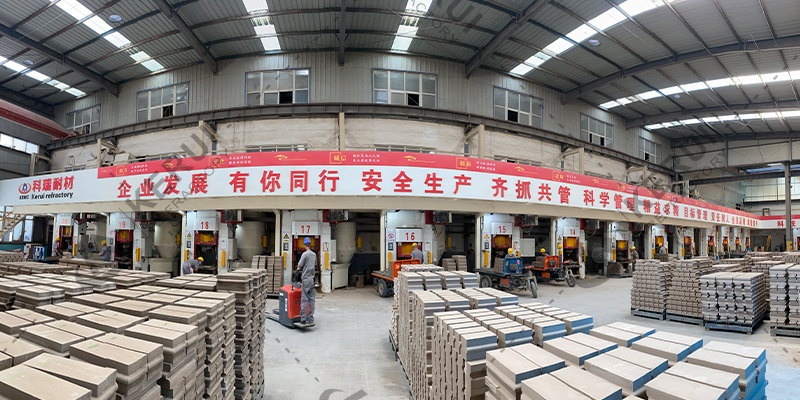
Charging Area
The charging area is exposed to continuous impact from raw materials and rapid temperature fluctuations caused by cold feed entering a high-temperature furnace. This condition often leads to surface abrasion, corner breakage, and thermal shock cracking.
- High Alumina Brick: good mechanical strength and thermal shock resistance under impact conditions
- Phosphate Bonded High Alumina Brick: excellent abrasion resistance in continuous feeding environments
- Wear-Resistant Castable: suitable for high-impact and high-abrasion zones
- Silicon Carbide Castable: high wear resistance and strong thermal shock stability
Furnace Roof
The furnace roof is subjected to long-term high-temperature radiation and repeated thermal cycling during continuous operation. Common issues include deformation, heat loss, and refractory spalling caused by thermal stress.
- Silica Brick: stable high-temperature performance and good load-bearing capacity
- Mullite Brick: balanced thermal shock resistance and structural stability
- Ceramic Fiber Module: excellent thermal insulation and energy-saving performance
- Insulating Castable: reduces heat loss and improves overall furnace efficiency
Melting Zone
The melting zone operates under continuous high-temperature conditions and is directly exposed to molten slag and mineral melt erosion. Typical problems include chemical corrosion, penetration, and long-term structural weakening.
- High Chrome Brick: strong resistance to aggressive slag corrosion
- Fused Cast AZS Brick: excellent resistance to chemical attack and molten erosion
- Silicon Carbide Brick: high wear resistance and strong thermal shock performance
- Corundum Castable: high purity and excellent high-temperature strength
Slag Line
The slag line is the most severely attacked zone in a rock wool furnace due to continuous contact with molten slag and chemical fluctuations. This area often suffers from rapid erosion, material loss, and structural instability.
- High Chrome Brick: excellent resistance to chemical corrosion and slag attack
- Direct Bonded Magnesia Chrome Brick: strong structural stability in aggressive slag environments
- Rebonded Magnesia Chrome Brick: improved density and enhanced corrosion resistance
- Low Cement Refractory Castable: high strength and low porosity against slag penetration
Burner Area
The burner area is exposed to direct flame impact and frequent temperature changes caused by burner operation.
This leads to thermal shock damage, surface cracking, and localized spalling.
- Mullite Castable: strong thermal shock resistance under flame exposure
- Andalusite Brick: good volume stability and crack resistance
- Low Cement Castable: high density and improved thermal cycling resistance
- Silicon Carbide Castable: excellent resistance to flame erosion and thermal shock
Tapping Area
The tapping area is continuously exposed to molten material flow and severe mechanical erosion. Common failures include abrasion wear, erosion grooves, and rapid lining thinning.
- Silicon Carbide Brick: excellent resistance to molten flow erosion
- High Strength Castable: strong abrasion resistance under continuous impact
- Corundum Brick: high hardness and excellent wear resistance
Flue & Gas Channel
The flue and gas channel are affected by high-speed gas flow, dust erosion, and heat loss during exhaust operation. Improper insulation leads to energy loss and accelerated lining degradation.
- Insulating Fire Brick: low thermal conductivity and good heat retention
- Lightweight Castable: reduces furnace weight and improves insulation
- Ceramic Fiber Blanket: excellent thermal insulation and flexible installation
Why Do Rock Wool Furnace Linings Fail?
Slag corrosion, thermal shock, molten material penetration, and mechanical abrasion are the main causes of refractory failure in rock wool furnaces. Unlike some conventional industrial furnaces, rock wool furnaces often process mineral raw materials with unstable chemical compositions. Variations in CaO, MgO, FeO, and SiO2 can significantly change slag chemistry and accelerate refractory wear.
Several major factors contribute to lining failure:
| Main Cause | Impact on Furnace Lining |
| High temperature | Accelerates refractory wear |
| Slag corrosion | Causes chemical attack |
| Thermal shock | Leads to cracking and spalling |
| Mechanical abrasion | Damages refractory surfaces |
| Molten material penetration | Weakens lining structure |
| Continuous furnace operation | Increases structural stress |
Improper refractory combinations and insufficient insulation design may also shorten furnace campaign life.
How to Extend Rock Wool Furnace Lining Life
Extending furnace lining life requires both suitable refractory materials and proper furnace management. Several practical measures can help improve refractory performance:
- Select refractory materials according to slag chemistry
- Use high-corrosion-resistant materials in critical zones
- Optimize furnace insulation structure
- Reduce rapid temperature fluctuations
- Perform regular hot repair maintenance
- Improve furnace operating stability
In many modern rock wool plants, combining refractory bricks with monolithic refractory materials helps improve lining integrity and reduce joint-related failures.
Kerui Refractory also recommends optimizing refractory configurations according to furnace type, production capacity, and operating temperature to achieve better long-term performance.
Customized Refractory Design and Technical Support for Rock Wool Furnaces
Rock wool furnaces operate under different production conditions, raw material compositions, and furnace structures. Therefore, there is no single refractory configuration suitable for every furnace. A complete refractory solution should consider furnace design, operating temperature, slag chemistry, production capacity, and actual wear conditions.
As an experienced refractory manufacturer, Kerui Refractory
provides complete support for rock wool furnace projects, including:
- Overall refractory lining design
- New furnace refractory configuration recommendations
- Furnace repair and lining replacement solutions
- Troubleshooting for premature refractory failure
- Technical analysis of slag corrosion and wear issues
- Furnace life optimization and maintenance recommendations
- Material selection and technical support
To provide more accurate refractory recommendations and technical solutions, the following information is helpful:
| Required Information | Description |
| Furnace Condition | New project / Repair / Retrofit |
| Furnace Type | Cupola / Electric melting furnace / Tank furnace |
| Furnace Size | Dimensions and lining thickness |
| Operating Temperature | Normal working temperature range |
| Production Capacity | Daily or annual output |
| Raw Materials | Basalt, slag, mineral mixture, etc. |
| Current Refractory | Existing lining materials |
| Problem Description | Cracking, corrosion, wear, collapse, etc. |
| Damaged Area | Specific furnace zone |
| Expected Service Life | Target campaign duration |
Based on the provided information, Kerui Refractory can recommend suitable refractory materials and provide customized technical support to help improve furnace performance, reduce maintenance frequency, and extend lining service life.
Related Articles:
- Fiberglass Furnace Lining Selection Guide
- Basalt Fiber Furnace Refractory Guide


